Saturday, October 26, 2019

THE MAGIC SWORD

“Never say goodbye because goodbye means going away and going away means forgetting.”― J.M. Barrie, Peter Pan


Image result for peter pan with swordAllen lays three of his swords on the rug in front of me. Like others who function on the autism spectrum, he has many collections of many things, but swords are his favorite. One sword is heavy and broad, one is short with a curved blade, and one is thin but strong with a fancy handle. It is the last one that is the newest, purchased just hours ago at Booth Corner's Farmer's Market for Allen's birthday.

"I need to put my consciousness into one of these swords," he says. "Which one do you think will be best?'

A million questions circle through my head, but I look at each sword and ask the one I think matters the most. "All of your consciousness," I ask, "or just part of it?"

It is the right question. "Just the bad things," Allen says. He sighs. "I'm tired of feeling bad about Dad. I'm tired of trying to make him come back. I know..." he gulps "that he's gone. I did everything I could but--" he holds his hands out in front of him--"none of it worked."

I nod in sympathy. In the fifteen weeks since Ron passed away quite peacefully in his easy chair, Allen's magical thinking has kept alive the hope that his father will one day conquer death and return. Almost every Saturday has found us on another quest for clues. About three weeks ago, the journeys stopped as Allen processed the finality of his father's death and struggled with his loss.

Allen stands up and takes a deep breath. "I don't want to feel bad about it anymore. I don't want to remember the bad things. Like how sick Dad was. And how much pain he was in. It was really sad and I don't like thinking about it."

"Neither do I," I say and fight back tears. The nineteen years since the car accident injured Ron have been difficult, but the past two years were particularly grueling, not  only for Ron but for our family.

"So," Allen continues, "I'm going to take the bad thoughts and I'm going to transfer them to a sword. And then I will only have the good thoughts about Dad. The fun things. The happy things."

"I think, " I say, " that is an excellent idea." I get down on the floor to examine each of the swords carefully. I am not at all alarmed by my son's idea. As an adult with Asperger's Syndrome (HFA), Allen needs tangible items to help with intangible ideas. Many therapists posit writing down your worries on a piece of paper, folding the paper up, and letting the paper handle the worries (PsychCentral). 1 Peter 5:7 suggests that we, "Cast all your worries on Him, because He cares for you." Harvard Health concludes that many people with Asperger's suffer from anxiety but find it difficult to address. I've let Allen do what he needed to do to come to terms with the finality of his father's recent death.

And it seems we have arrived. I study each sword and comment on its good points. Then I touch the one in the middle, the one just recently purchased. A "Three Musketeer Sword" the seller called it because if its fancy red and gold grip. "This one," I say. "And I have two reasons."

Image result for three musketeer sword"I agree that's a good choice," said Allen. "But why?"


So I tell him. "This sword was not here when Dad was here. So it has no...previous print from Dad. It has no...memories of him, you know?" Allen nods. "And it's long and strong and made of steel. It will hold even your unhappiest memories."

"Okay," says Allen and gathers up his swords. He takes a deep breath. "Good bye to the bad memories!" he says and carried the swords up to his room.

"Good-bye," I whisper and turn back to my knitting. Upstairs I hear the sounds of Allen's footsteps, his door opening, then silence. I do not know how long it will take to transfer all Allen's bad feelings about his dad.

But it does not take long at all. In a few minutes he is back. "I did it!" he says. "Now, I don't need to feel bad about Dad anymore. They're all there in the sword. I don't need to carry them."

"Great," I say.

"But," and he grins at me with the smile that has charmed since childhood, "I kept the good memories." He touches his chest." I kept them all right here."

I nod and look down at my knitting, letting my tears fall. "I kept my good ones, too," I say. 

Image result for keep the good memories

Sunday, October 20, 2019

Words from a Widow

God is close to those crushed in spirit; God will not leave you alone. Psalm 34:18

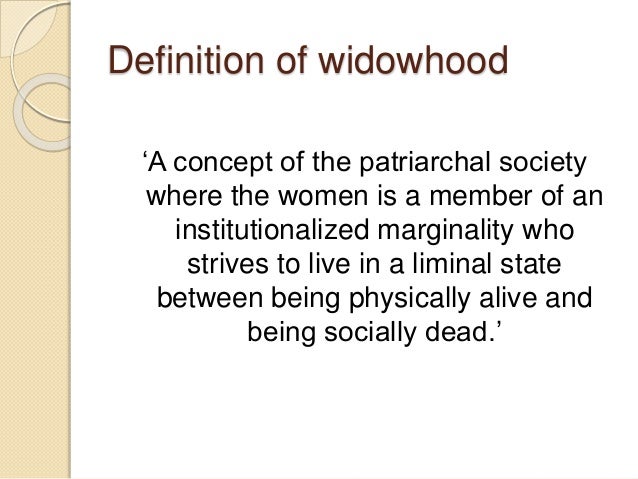
Image result for widowhoodA few months ago, I joined a group of 700,000 American women without any intentional planning. I became a widow. And I am sorry to tell you, my sisters, that 75% of you will someday join the same club that does not discriminate due to race, creed, religion, socio-economic strata, or sexual preference (Kenen, 2018). It is a cold hard fact that women who lose a spouse outnumber men who lose a spouse by 7 to 1. And while there are logical reasons for that--women tend to live longer then men and marry someone a few years older than themselves--it doesn't help when you find yourself rudely thrust into a role for which you are not prepared and which is--sad to say--undervalued in today's culture.

Because, let's just face it, there are no longer any rules.

Remember that scene in Gone With the Wind when Vivian Leigh, as the charming Scarlett O'Hara, is tapping her black-shod foot at the Bazaar for the Glorious Cause and Rhett Butler, played by the devilish Clark Gable, offers an enormous amount of money to dance with her? Dr. Mead, without hesitation, explained that "Mrs. Hamilton is in mourning," and encouraged Rhett to choose another lady of his  liking. And while Scarlett defied all social customs of widowdom and consented to the dance is besides my point; the thing is that everyone KNEW Scarlett was a widow. And they KNEW the proper etiquette required.

I'm not suggesting we return to the donning of long black dresses which cover our faces and hide ourselves inside our houses for a year or more. Heck, I didn't even wear black to my husband's funeral and I'm not about to start. But I do wish that, just as we teach employees in a workplace how to interact with each other, we'd pay a bit more attention to what we say to widows. Widowhood is uncharted territory for all of us. It ranks up there as the number 1 stress of all time. It's falling into a new dimension without a guidebook, plunging down the mountain with no safety net, and arriving in a foreign country without a translator.

Image result for widowhood
Scarlett's black widow's weeds were at least public acknowledgement of her loss, a way of telling the world, "Look, I've been through something here so give me some space." For the most part, widowhood is invisible. I still go to work, pay my bills, care for my house, my autistic son, and my two older kids. While I'm missing Ron's SSI, I'm better off then some women who lose 75% of their income when a husband dies and who are often left with  no idea of how to handle the checkbook or when to take the car in for inspection. Ron was ill for 19 years so I've been doing all of those things anyway.

But I am still grieving and will continue to do so for a long time to come. I dreaded going back to my job as a teacher in September because those ,"What did you do over the summer?" conversations were bound to come up. "Me? Oh, my husband died," left people stunned into silence. Should I have avoided the truth?

Image result for widowhood is not for sissiesRecently, I caused a bit of a stir on Facebook when I suggested that people think about what they say to a widow. Let me make this clear: I am always gracious and grateful for anyone who cares enough to ask me how I am doing and actually listens. I am not grateful to the ambulance company who sent me a bill for the night my  husband's body was taken to the morgue and noted that Medicare would pay "if the deceased signs for it." I am not grateful to Medicare who sent a letter addressed to my husband saying they would no longer approve claims on his number because, "on July 13, you died. Our condolences." I am not grateful to Ron's retirement fund assessor who suggested I cash the last check--sent the week after Ron died--by having him sign it when I had just told him Ron had died.

Widows have been with us a long time. We're not going anywhere. Maybe, once we get over our grief--often compounded if, like me, you've been a caregiver to a sick spouse--we can organize and march on Congress, demanding a decent bereavement period and financial aid. But in the meantime, I have a list of suggestions of what to say or do for a widow you know.

1. Pray for them. Widowhood is lonely. And scary.
2. Send a card. I have a box of sympathy cards sent the weeks after Ron died, but I do appreciate a simple, "Thinking of you" note that lets me know I have not been forgotten.
3. Make a call. My phone still works.
4. Make a meal. Truth is, I don't feel much like cooking. Allen and I are existing on hot pockets, pizza, and scrambled eggs.
5. Give a restaurant gift card. For when we get tired of the hot pockets, pizza, and scrambled eggs.
6. Extend an invitation. We live in a two-by-two world. But I'd still like to be invited over for dinner or a game night.
7. Offer to do a chore. Show up at the house and offer to rake the leaves or lend a hand at home repairs. Allen and I have become pretty handy, but there are things we cannot do.
8. Give a gift. A friend recently gave me a little basket of soaps and sachets. I treasure it because she remembered that I am still in need of some support.
9. Listen to them. Recently, several people have asked me how I am doing, but haven't stayed to hear the answer.
10. Hug them. If appropriate and in the proper place, offer a hug. Chances are good that we've been missing quite a few.

Okay, I am done my grumpy widow rant. Honestly, I do know people have their own lives to live, but I also know that, as a society, we have done a poor job of following James 1:27 to care for the widows and orphans. I've seen about a hundred commercials asking for donations to animal shelters and not one suggesting you take a widow to dinner.

Maybe the 700,000 of us should get a publicity agent.


Image result for widowhood

Gone with the wind Atlanta Bazaar

Saturday, October 12, 2019

FADING MAGIC

The magic thread of its huge haunting spell,
And that linked his life to magic kingdoms
And to lotus-land

--Tom Wolfe

He'd tried his best. For the last twelve weeks, he'd hung his father's shirts on the branches of a tree at Smedley Park, watched a horse race across the field at Linvilla, set his Dad's shoes out on the porch, waited for a train that never came, and watched a ship with a mysterious symbol on its hull float down the Delaware River. He'd kept hope alive in his heart, even as it grew fainter with each passing day, trying to read into the world around him clues about his father's return.

Despite it all, despite his fervent wish, despite the magical thinking that kept him from grieving too deeply, his dad hadn't come back. And now, as more and more pieces of his father were packed up and put away and the sounds of his father's voice became fainter in his memory, he began to think that maybe the magic wouldn't work. Maybe, wherever his father had gone, he just wasn't coming back.

"Why wouldn't Dad want to come back?" Allen asks me one evening.


Inwardly, I sigh. It has been a common theme of our conversation the last three months. Patiently, I give him the same answer I have been giving him all along.  "I'm sure he wants to come back," I say in a level tone. "But I don't think he can. It's like he's in another dimension in heaven. He just can't take a train or a boat to get back to us."

"Sounds stupid to me," says my son who lives on the upper edges of the autism spectrum and understands the world in the most concrete of terms. "If he wants to come back, he should be allowed to."

Ever since Ron passed away in his sleep, quietly slipping from us while my daughter and I were visiting my father, I have struggled to help Allen accept the finality of death. It is a concept illogical to most on the autism spectrum who find comfort in the ability to control the world around them, a world they often find too loud, too colorful, too busy. I have tried to make Allen's life predictable again with routines for the two of us: who cooks dinner, who cleans up, who does the laundry. Every Friday night is market night and take-out supper; every Monday night is pasta and a movie. The routines help Allen whose emotions have been scrambled by his deep loss (Indiana University, 2019). 
Image result for magical thinking


And I have accepted the pieces of magical thinking that has found us spending most Saturdays searching for clues to Ron's return, seeing each of Allen's ideas as a step he needed to take in order to mourn his dad. I have put no time table on it, resolving to participate in the magical journeys as long as Allen needed them.

But the magic appears to be fading. It has been two weeks since we have waited at a train station or checked the shirt Allen hung on a tree. 

"The thing that really bothers me," and Allen pounds his fist on the table to make his point, "is that the night Dad...left"--his voice catches on the word--"he didn't say good-bye. " His voice drops to a whisper. "I wish he'd said good-bye. Then I could have said good-bye to him."

"I know," I tell my son. "I wish that, too. But I don't think Dad knew he was leaving, that God was going to call him to Heaven. I don't think he had time to say good-bye."

"I was just upstairs," says Allen. "If he'd called me, I would have come downstairs."

"I know," I assure him. "And Dad knew you loved him."

Image result for magical thinkingAllen nods his head sadly and is silent for a few moments. I wait, giving him time to process. Then he heaves a huge sigh--full of loss and pain--and closes his eyes. From experience, I know that he is putting his words together carefully. "I guess," he says after a while, "the only thing left to do is to find a way to honor him."

My heart soars. This is a huge step towards acceptance. I nod my head.

"What would you suggest?" I ask.

He shrugs. "Well, maybe like once a month we could cook his favorite foods and play his favorite game," he says.

"That would be good."

"And at Christmas we could still hang his stocking."


Image result for Dad christmas stocking
"Definitely."

"And once in a while we can go outside at night and look at the stars. And think that Dad is looking at them, too."

I hold back my tears and nod. "Sounds good. And when Bonnie and Dennis are here on Sunday for your birthday, we're going to go put the flag from the VA on Dad's grave."

He is thoughtful. "My first birthday without Dad."

"I know. It's sad, but we'll all be together."

"Okay. Maybe we can sing the birthday song in the off-key crazy way Dad had."

"Of course," I say. "It's a family tradition."

Allen smiles at me and walks into the kitchen to get a snack. "I'm making you tea!" he says.

"Nice," I say. Magical thinking may not bring his father back, but it has been helping Allen cope with his loss and move into a world without his father at his own pace and in his own time. I hear him in the kitchen now, talking to himself as he fills the tea kettle, takes a mug from the cabinet, gathers up the creamer and the sugar. Step by step, he reminds himself what needs to be done. He gets to the other side of the task.

He, like his brother and sister, is getting to the other side, beginning to imagine life without Ron.

I look at the family picture on the shelf next to my desk, a photo taken years ago when the kids were small and Ron was well. On some plane, on some level, Ron still exists. Then I feel a tear escape from my eye. I, too, am learning to move into a life without my husband. 

I think I am going to miss the Saturday journeys. Even though I knew Allen's magical thinking would not bring Ron back, it was nice to keep the magic alive just a while longer. 


No photo description available.


Thursday, October 3, 2019

My Love Letter

Dear Ron,

Happy Anniversary! Today would have been 45 years for us, 45 years for two crazy kids who had no money, few skills, and no idea how hard life would be. The night before our wedding, I worried that I would  not be able to love you in the way that you deserved.  But I knew we were meant to face life  together. When we promised to love each other--no matter what--we were both too young to know just what "the no matter what" could be. 

It didn't take us long to find out.

Somehow, we managed to scrap together enough money for a down-payment on our "starter house", the place where we lived all of our married life. Within the walls of that three-bedroom row home, we raised three kids and provided shelter to the horde of "Lost boys" who joined our ranks and stretched our food budget. There was never quite enough money, but there was always more than enough love.

Those years raising the kids on a shoestring might have seemed hard at the time, but they were only practice for what was to come. We learned, in the first 19 years of our marriage, to stick together, to uplift each other. The love I had for you when I was twenty grew by leaps and bounds. We learned to laugh even when the cupboards were bare and the bills were deep. We learned to hang onto each other and onto God.

Then came the tough years. In 1992--the same year I returned to college to finish my purloined degree in education--you began to show signs of mental strain. Our furniture and our walls suffered as you often needed to take out your inner demons on physical items. We rode the roller coaster of bipolar disorder for years while you fought your battles and I did all I could to protect the kids. Those years really tested my commitment to you and there were times my love wore a bit thin. But I was--and am--a girl who honors her promises. I stayed. After seven years of hospitalizations and therapists, you made some progress. Life settled down. I finished my degree, started on a Master's, and took a job as a teacher. At last, money was no longer a major issue.

We enjoyed the lull for a few months. Right up until March 2, 2000, when the driver of a red pickup truck ran a red light, broadsided your Taurus, and put you in the hospital for ten months. Despite our best efforts, despite multiple surgeries and heartfelt prayers, you never really recovered. My heart--once afraid I could not love you enough--broke to see the pain you faced. 

Somehow, we found a way to make it work. I got my Master's, got a better job, began work on a doctorate. It wasn't easy. None of it was. But even with our lives bent out of shape, we still find pockets of happiness. Too many hospitals, too many surgeries, too many pieces of you left a piece at a time. Too much of me was stretched too thin. I was exhausted. But I still loved you. 

The older two kids left for their own lives. I stayed and held the pieces together. In the last few years, my love, I did everything I could to help ease your pain, to find you the care you needed. I would have willingly spent my last breath taking care of you.

God had other plans. He took you home to Him on July 13. Now I am walking life alone, but with the memory of you forever in my heart. Whatever I do, wherever I go, I take you with me.

Our life was seldom an easy one, but I would do it all again. Because, in the end, I really did love you enough.

Forever,


Linda


Saturday, September 28, 2019

LISTENING FOR FATHER'S VOICE

1The Lord came and stood there, calling as at the other times, “Samuel! Samuel!
Then Samuel said, “Speak, for your servant is listening.”
I Samuel 3:10
"I don't think I can do this much longer," says Allen. He sits in a dining room chair, the image of discouragement; head down, elbows on knees, tall body leaning forward.

"Do what?" I ask. I am trying to remember if it is Chicago or Terbium that uses footnotes as I scan a new document. I turn in my own dining room chair to look at my son. My lack of energy to negotiate space in my office the past few weeks has moved my laptop and printer to a fold-out Ikea table in a corner of the room that was so recently Ron's. Allen now fights space aliens on the desktop HP upstairs.
 Maybe I'll take it back someday. Maybe I won't. Maybe I feel closer to my husband down here, where he spent his last nine months.
"You know," Allen shrugs. "Trying to get Dad back."
"Oh." I sigh. I remind myself many times a day that autism grief is not neuro-typical grief. In the last two months--almost three--Allen's magical thinking has kept the hope alive that his father will return from the dead. Even though he participated in the funeral and saw his father's body lowered into a grave, he continues to hold onto the possibility of a Bible type miracle.
"It's just not fair that I can't talk to him anymore," my son continues. "No matter WHAT"-- and he emphasizes the word by raising his hands up--"I could always talk to him." Tears form in the corners of his eyes.
He, like me, is remembering phone calls from hospital rooms when Ron would call to say "good-night," days he sat in his easy chair in the living room and called out a booming, "Hello!" to whoever entered the house. I hold back my own tears. I, too, miss my husband's voice.
My heart aches for my youngest child. Injured when Allen was young, Ron was never able to run and play with him the way he did with Bonnie and Dennis. The only father Allen has ever known has spent more time in hospital rooms than home.
But a Dad is still a Dad. 
"What do you think we should do?" I ask Allen, whose position on the upper end of the autism spectrum makes the finality of death a difficult concept to grasp. Almost every Saturday has found us engaged in another magical outing, gathering clues for his father's imminent return.
Allen sighs. "We'll try the train station one more time," he says without much hope. "Then maybe we can figure out a way to talk to him. Even if he can't come back, at least he'll be able to hear us."
"He hears us," I assure my son. "We can still talk to him.All the time. Anytime we want."
He nods. "I know. I do. But I would like to hear HIS voice." He pauses. "Do you have, like, an audio of Dad's voice anywhere?"
"Maybe," I say. Somewhere there are video tapes of family vacations. Do we still have a VCR? Does anyone? And there is a audio recording of our 25th anniversary service. Do I have a tape player?
Allen is now warming to a new project. "It would be so cool if we could just hear him! Just hear his voice sometimes. Then I would still feel like I had a Dad." A tear slides down his cheek. "I still need a Dad."
"We all do," I say. Then I recall a lesson at Wednesday Mission Possible, the story of young Samuel who heard the Lord calling. In 1 Samuel 3, the boy Samuel is serving at the Temple with the priest, Eli. When he hears a voice calling his name in the night, he assumes that it is Eli and runs to him. But Eli tells him it is God calling to him. Samuel learns to listen to the Lord.
Now, in this new season of my life, I, too, am waiting to hear from God. 
"You know," I say to Allen, "I'll bet that if you listen really closely, if you are really quiet, I'll bet you can hear Dad's voice."
My son is skeptical. "How would that work?"
I think quickly. "Well, let's remember what his voice was like."
"Loud!" says Allen. "But gentle, too. Like he was always happy to see us. Even when he was hurting."
"That's good," I say to Allen. "I remember the way he would hold up both his arms and say, "You're home!'"
"Yeah," says Allen. He smiles. "And then he'd say, 'There you are!' Like we'd been gone a really long time."
"Let's be really quiet for a moment," I tell him. "And we'll just listen for Dad's voice."
"Okay."
And for a few moments we sit in the dining room where Ron's hospital bed so recently stood, where a walker and a wheelchair were at the ready, where boxes of medical supplies usurped the room. And we listen. With all of the love we both still hold for Ron, with our memories of him close to the surface, we listen.
"I hear something," Allen whispers.
"So do I," I whisper back.
Allen smiles. "Maybe it's Dad," he says. "Or maybe it's God."
My heart swells. A Dad is still a Dad. 
 

Sunday, September 15, 2019

LEAVING: THREE VIEWS

Ron

This part will be bad.

I don't know how I know it. I have fallen asleep in the lift chair Linda and Allen bought me six weeks ago. Linda said they needed to bungee cord it to the tail gate of her SUV and then Allen had to maneuver it up the hill and into the house. It is a comfortable chair and for the first time in a very long time I am feeling content. The constant pain in my chest and belly is gone and I am dozing. I could have gone to bed, getting myself into my wheelchair and transferring into the hospital bed that hugs the wall in the dining room. My room. But Linda and Bonnie will be home from the beach soon and I want to see them before I go to sleep.

I'm so tired though. So tired of the pain and the medication and the doctors. So tired that Linda needs to do so much for me. And my chair is just so comfortable. I push the remote and lean back as far as I can.

Then, even though my eyes are closed and there is a wall between us, I see Linda and Bonnie out front. They are just getting out of the SUV, dragging suitcases and a bag from Dolle's. Caramel popcorn. Linda has promised me some. She always remembers. Bonnie puts her bag in her red Civic parked out front and for a moment I think she will get in her car and leave. Come in, I think. Say good-bye. And maybe she hears me or maybe she loves me because she walks up the path with Linda and they open the door.

Now it gets really hard.

"Hello!" they say and they drop their bags on the porch. "We're home!" They are at my chair now and I am trying to open my eyes and find my voice but I cannot seem to move. I feel--well, I'm sure Linda could think of a better word for it--but I feel absent, like I'm not even there.

Bonnie shouts at me. "Dad? Daddy?" and Linda shakes my arm. I hear Allen coming down the stairs, Allen who went up to WaWa to buy me a soda and a pretzel a while ago then went upstairs to play a computer game. "What's wrong?" he says.

It gets really confusing now.

Linda grabs the phone and I know she is calling for help and she says she thinks I am not breathing and I want to tell her that I am, too, breathing but then I think that maybe I am not. Bonnie continues shaking me and Allen gets a glass of water and pours it on my feet to wake me up and I want to wake up or maybe I don't want to wake up because sleeping or whatever I am doing is so nice.

Then there are people coming into the house and they have black bags and there are blue lights flashing outside and I think how they will confuse Allen and I want to tell them to turn them off but everyone is talking and Bonnie is crying and Linda is controlled because she has had to be. There are cold things against my chest and people--paramedics, I guess--are pulling at me and one of them tells my wife and kids to leave the room.

I am warm. I am floating. I hear a voice. It is a little like a warm summer breeze and I know that no one else can hear it.

"Son," says the voice and it sounds a little like my dad and a little like Harry Callas, "it's time to come home."

And I want to say, "I am home. I have lived here with Linda for 44 years." But I know that it is not true, that this little house has never been home, and as the people--what are they called again?--are trying to bring me back, I am already gone.

Linda

The obituary will say that Ron passed away quietly, but it is not quiet here now. There are paramedics who have asked us to leave the room as they assemble their equipment and try to bring Ron back; I want to tell them to leave him alone, his body has been through enough. But I am busy answering questions for a police officer and showing him Ron's ID and wondering where the cat is. Bonnie and my best friend Chris are in the kitchen and Allen is in the dining room, telling and officer that his dad has just fallen asleep.


Then the policeman sadly shakes his head at me and says, "Time of death, 9:43" which is ludicrous because Bonnie and I walked in the door at 9:10 and found him in his chair, already still. Allen shouts, "My dad's not dead!" and runs up the stairs. Chris hugs Bonnie and Bonnie takes out her phone to call her husband and her older brother and I know I need to make phone calls to Ron's family but I cannot find my own phone. I walk back into the living room; Ron has been covered with a pink sheet and it seems an odd choice for my big, burly husband. My purse is on the floor where I dropped it and I take out my phone but the battery is running low. A policeman is at the door and he tells me the medical examiner will need to come out because Ron's death was unattended. I want to protest, because Ron has always been tended. The Saturday aide was here until 5 and Allen was upstairs and Bonnie and I were on our way home. But I nod my head and agree not to move or touch Ron--as if I could move a man who weighs over 300 pounds--and I grab the landline. The front door is open and I spy the cat crouching at the open door. I scoop him up and hand him to someone--Jared, maybe?--and tell him to put the cat in my room. 

Bonnie's husband puts the cat upstairs and goes to join Bonnie on the porch and I heard other voices on the back deck. Dennis and Laura. All of my children are here. I think of how many times we have all gathered for a surgery or an emergency and how they have always come, pacing floors and offering hugs and holding hands.

I start to cry.


I sit at the kitchen table and call my father, who thinks we are calling to tell him we have arrived home safely. He is surprised, but not stunned. On some level, we have spent years expecting this. Dad murmurs sympathy and love. Then I call Ron's brother Tom and he thinks it is Ron calling at 10:02 to talk sports but when he hears my voice, he says, "What's wrong, Linda?" and I tell him. He shouts, "What?" then he is calm. Tom says he will call Ron's mother and I am relieved. How do you tell a 92-year old woman that she has outlived her son?

Chris has fixed tea and hands me a mug and I think I smile my thanks, then I call my brother in North Carolina. He does not answer his cell phone and I do not know if he is home or away on business but I call the house phone anyway and he answers on the first ring. I can feel his love through the wire: "I wish I was there with you, Linda. I wish I could help you." I tell him I will let him know when we make arrangements and he says he will round up all his kids--three boys, one girl--and they will all come.

I am heading out to the deck to be with my kids when the phone rings and it is Ron's mother and her voice is heavy with sadness but she says she is okay and she wants to know if we can use Bateman's for the funeral and she offers to pay for it and I am still too numbed to think of it all. We agree to talk about it on Sunday.

I am almost to the deck to be with my kids when I notice that Allen, an adult with Asperger's Syndrome, is sitting in what has been Ron's room for the last nine months. He is holding an ice cube in each hand. Stimming to calm himself. I ask Jared to keep an eye on him. Finally, I join my older kids on the deck.

Bonnie is crying and hugging Laura, Dennis' girlfriend, and Dennis is leaning against the deck railing, tall and thin and pale. I go to him and I reach up to put my arms around him. He folds himself over me, tears streaming down his face.

"You sacrificed your life for Dad," he says. "No one could have done more for him that you did. You are a good, good woman." I hope that it is true and we stand there for a long time, hugging and crying until the mosquitoes attack us and the medical examiner arrives and we head into the kitchen.

She is young, the assistant ME, and kind. She asks for Ron's ID and I produce his wallet. She asks about his medical conditions and I give her the litany of surgeries and illnesses of the last 19 years.

Impressive, she says. 26 surgeries in 19 years. Twice as many hospitalizations. Then she says she needs to take picture and I should leave the room again because the paramedics will need to move the body--not Ron now, just the body.

We are back in the kitchen again and someone--Laura? Jared?--goes for coffee. We talk and share stories about their dad. We laugh. We cry. The ice cubes have melted in Allen's hands and he is sitting very still, clutching the blanket that was on Ron's bed.

We are going to be okay, I think. We are numb, still processing, but the kids are saying, "Remember the time Dad..." and sharing their childhoods.

In my mind, I say to Ron, Your kids loved you, and I know that he hears me.

Then the ME, Jenny, asks me to come back into the living room and says she would like to take the body--Ron's poor, broken body--back to the office but she is sure he died of natural causes. She wants to do an external autopsy to rule out any mechanical defect in his pacemaker. I can have the funeral home pick him up in the morning.

But it is morning now, and still we are talking about Ron. The police have left and the cat has been freed from my room, but is is cowering under the couch. Chris promises to call on Sunday and talk to the minister after church and she leaves. We sit in the kitchen, and it is suddenly 2:30 and someone says, "We should get some sleep," and the older two children and their partners leave but will be back in the morning. Jared and Dennis move Ron's heavy chair into the dining room because I cannot look at it.

There are more hugs and tears at the door and Allen shakes hands and gives hugs. I turn off the porch light and lock the door and ask Allen if he is doing okay.

He shrugs. "I'm going to go finish my game," he says. Then he turns to me, adamant. "Dad's not dead. People should stop saying he is."

"Okay," I say and nod.

"He'll wake up," says Allen. "You'll see." He heads up the stairs and into the office and I hear the sounds of a computer war.

I try to sleep. I can do this, I think. For the last 19 years I have done the impossible. I can do this.

Allen

The policeman tells me that Dad is dead but I do not trust him. Last year when I was trying to change my flat tire the same policeman said I was acting in a "threatening manner" and took me to the hospital because he said I was "talking crazy." I was only telling him what the directions on the Fix-a-flat can said and he thought I meant the can was talking. Now, that WOULD be crazy.

But this is different. People think I don't understand because my mind gets scrambled sometimes but I know what I know. And I know they all think Dad is dead, even Mom who should know better. But Dad gets really tired and he sleeps for a long time and we just need to let him sleep and then he'll be okay.

Mom said the lady who came to examine Dad--Jenny?--took him someplace to sleep for as long as he needed. But I do not know why he could not just sleep here. His bed is here. He'll wake up, everyone will see. I just need to believe it, that he can wake up. 

Mom says we will have to plan his funeral tomorrow with Dennis and Bonnie and Mom Mom and Uncle Tom. I don't care about it, but I will do what Mom wants me to do. It's going to be really funny when we plan it all and then Dad wakes up.

He's just got to wake up.