Tuesday, July 5, 2016

Voices from the Edge: The Equality of Birdshot

Image result for bird shot shellI heard them scatter across the living room floor, hundreds of tiny metal pellets known as bird-shot. The cats bounced on them, further spreading the little specs to the four corners of the room. I had simply asked Allen to move his weight vest, the one that he wears when he power walks, so that Bonnie and Jared could sit down. But one of the pockets holding the metal  shot had ripped. The bird shot bounced across the floor, rolling under couches and into heat vents. And as Bonnie yelled at her younger brother and Jared ran for the broom, all I could think about was Harrison Bergeron. Harrison Bergeron and the equality of bird shot.
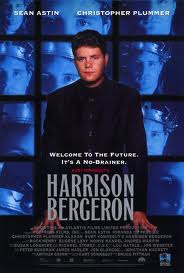
In case you are not familiar with it, Harrison Bergeron is a short story by Kurt Vonnegut, set in a futuristic dystoptia where everyone in the world is finally equal in all ways. No one is smarter or stronger or more talented than anyone else and this miracle of equality is brought about by bags of bird-shot. Those who are judged to be superior in anyway are required by law to wear bags loaded with lead weights, or fixed with headphones which emit ear-splitting sounds, or wear hideous masks to hide beauty. And the smartest and strongest and most beautiful of all the inhabitants of this brave new world is Harrison, the fourteen year old son of George and Hazel, and an escaped convict. It was a story I taught to my sixth grade students a good number of years ago and like many stories, certain lines were implanted forever in my brain.

THE YEAR WAS 2081, and everybody was finally equal (Vonnegut, 1961). And as good as that might sound, the equality Vonnegut describes is not at all the world I want for my children,  particularly for my autistic son. George Bergeron, Harrison's father, is forced to wear a "handicap" of 47 pounds of bird-shot padlocked around his neck because he has been judged to have a superior intellect. And as the little pieces of bird-shot rolled across my floor, an image of my son when  he was young and struggling in school came to my mind. He did not need bags of bird-shot as a handicap.

Equality does not exist. There will always be those who are better at some things, smarter at some things, more athletic at some things. Yes, we were all created equal and our rights as citizens guarantee us the same liberties as others. But we are all unique, little pieces of bird-shot unlike any other. Equality, as Vonnegut points out, does not solve everything:

Some things about living still weren't quite right, though. April for instance, still drove people crazy by not being springtime. And it was in that clammy month that the H-G men took George and Hazel Bergeron's fourteen year-old son, Harrison, away (Vonnegut, 1961). Harrison makes his way to a television studio where a ballet program is being broadcast. George and Hazel are in their home, watching the show, when Harrison bursts into the scene. But their handicaps keep them from being concerned with their son.
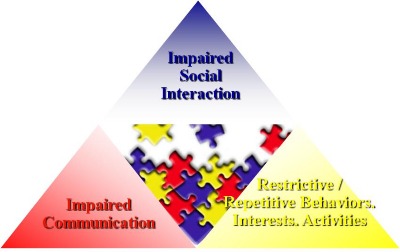
Image result for asd
I am always concerned with mine. Allen, quite in keeping with someone who has Asperger's Syndrome-- the highest functioning form on the autism spectrum-- was more concerned about his vest than my floor and the bouncing bird-shot. While Bonnie and Jared did their best to clean up, Allen wanted to know what was to be done with his vest. My mind still occupied with the final scenes of Vonnegut's story, where Harrison has ripped off his handicaps and is dancing with the most beautiful ballerina without her hideous mask, I suggested duck tape, our usual go-to for household emergencies.

"NO!" he loudly declared. "It will ruin the vest. I need you to sew it. That's what I need!"

I tried to be patient. Really. "I can't sew it," I explained. "My sewing machine can't handle fabric that thick."

"Then sew it by hand," he stubbornly insisted. I shook my head. "The material's too tough for that. But maybe we could put the pellets in a new pocket and cut off the old one."

"NO!" Allen shouted. "You are not being helpful." He pounded up the stairs to his room, the vest still oozing bird-shot. Carefully, we picked it up and placed it in a large plastic bag. I heard Allen's door slam.

"He'll  be back," I told the family. We swept up as many of the pesky pellets as we could find. I would, I was quite sure, be picking them up for a long, long time. They would hide in cracks and crevices of the floor, the cushions of the couch, the seams of the baseboards. We got out Scattergories, our go-to family game, and began to play a very unequal game. Some of us were better at certain categories than others. Unlike Harrison and George, we did not need ear radios with high pitched screeches and bags of weight strapped to us. We were, all of us, handicapped in our own ways. Not equal. Not by a long shot.

Eventually , as predicted, Allen came back downstairs. He dragged the vacuum cleaner with him and dutifully set to work on the couch and the floor. Then he murmured a brief apology for his actions and joined us for what proved to be a riotous game complete with the laughter that is bound to happen when people who have different talents and different skills get together. In Vonnegut's world the game would have ended in a tie; in this one, Jared was the clear winner.
Image result for harrison bergeron
It was the next day that Allen came to me and offered another apology. "I said you weren't being helpful," he said. "And I know you were trying to be. So, thanks. I was just worried about my vest."

"I know," I said and gave him a hug. "We've all  got things that bother us."

I am sorry to tell  you that Vonnegut's tale ends in tragedy. While Harrison and the lovely ballerina dance for a while and make the audience awe at their combined beauty, they are both ultimately shot and killed. In 2081, equality is  more important than humanity. George and Hazel, equal but deficit, do not even mourn his passing.

Allen, God bless him, is different than his brother and sister. He is different than me or his dad. He has, as we all do, his own bags of bird-shot, his own handicaps. He also has his own talents. As I continue to parent this now-adult through the many nuances of autism, I need to be more concerned with equity than equality. Allen's needs are different than those of his siblings.

If everyone is equal, if everyone is ordinary. then the extraordinary is out of reach.

And each time I kick another piece of bird-shot across the living room, I will remember it. Allen is, in his own way, extraordinary.

Monday, June 6, 2016

Voices from the Edge: If I Had a Hammer

If I had a hammer,
I'd hammer in the morning,
I'd hammer in the evening,
All over this land,


Ever since Allen had put on a new doorknob two weeks ago--all by himself, I might add--the front door had not shut properly. Every night, he slammed and banged to get the door to shut and lock, and every morning it took all my strength to pull it open. But it wasn't until Friday that I realized the doorframe had pulled away from the porch wall; all of our banging and tugging was only pushing the frame farther away from the supporting wall.

"We need a hammer," I told Allen. "So we can pound the frame back in place."

He thought for a moment and I, with the wisdom gained from years of parenting this adult who lives on the upper ends of the autism spectrum, waited. And waited. "Well, maybe," he said. "I'll see if I can find the hammer."

Progress. We have a variety of tools, but I have given up on bringing any order to the basement while Allen works on his robot project, so tools that I need frequently--such as hammers and screwdrivers--are kept in the bottom drawer of the file cabinet. It wasn't long before Allen returned with the smallest hammer he could possibly find, a ball peen probably snatched from his metal work downstairs.

"I really think it's too small," I said. "Nah," he said and shrugged. "A hammer's a hammer."

Okay. I guess. So Allen and I went outside and I showed him just where he needed to pound the doorframe back into place. He gave it a few whacks. Nothing happened.


"Harder," I said. "Put some muscle into it!" Again, he gave it a few whacks. Nothing.

"Not going to work," my son told me. " If I hammer any harder, the top of the frame will break. See?" and he points to the top where I can see absolutely no discernible cracks. "You'll have to hire someone," he said sadly.

I'd hammer out danger,
I'd hammer out a warning,


Once Allen has his mind made up, it is very difficult to change. But I was determined to try. Anyone who knows me knows that I really hate to hire someone to do something that Allen or I can do ourselves. My father, a whiz with any hand tool known to man, taught me to change the oil and the tires on a car, rewire an outlet, and hammer without hitting my thumbs.

"Come on," I told my son. "We just need a bigger hammer."

He hesitated. "Well, there is my sledgehammer. But it will probably break the door. Then you'll really be mad! Sorry." and with that he was off to the basement, where the various parts of his robot currently live.

I studied the situation a few more minutes. I wasn't really strong enough to push the frame back in myself, but a sledgehammer packs a wallop. I'd last seen it on the back deck. Resolutely, I dragged it around to the front. If I could manage to lift it, it just might work.

And it did. It took a few whacks and a few tries before I hit my mark, but I accomplished the task and the frame was solidly back in place. I wished, not for the first time since Ron's car accident, that I had a husband that could do these things and didn't need to figure out so many things on my own. I wished there was someone around to be a mentor to my son, someone to show him the things a dad should teach a son. But, at the same time, I was grateful to my dad who'd taught me basic home maintenance skills, and my youngest son who did his best to help when he could.

The frame was in place and I was preparing to drag the sledge hammer around back when Allen reappeared.

"I thought it over," he said. "And I think you're right. We just need a bigger hammer." Allen's delayed response is not at all unusual for those on the spectrum. Since his brain has developed differently, the cells are packed tighter and the stems are shorter. It takes longer for him to process things.

"Too late," I told him  and was sorry I hadn't waited a while longer. I did a Vanna White pose, pointing out the fixed doorframe.

He spied the sledgehammer at my feet. "You used my sledgehammer?"

I nodded. "Yep. And it worked." For a moment, I could not read his expression. Was he upset I'd gone ahead without him? Mad I'd used his tool?

Finally, he grinned his special Allen smile. "So," he said, "since you used MY sledgehammer"--and the emphasis is his--"it's like I fixed it. And I want the credit for it." With that he easily hefted the item and carried it away.

I'd hammer out the love between
My brother and my sister
Ah uh, all over the world.

If you are keeping score here--and I guess Allen is--it's five him, three me. But at least my door is fixed. And Allen, who maybe only had a minor contribution to the event, has defied the odds by being in the minority--only 6%, according to recent government data--of autistic adults who hold a fulltime  job.


Heck, let's put another one in the Alen column. And maybe one for me as well. We're doing okay.

Sunday, May 22, 2016

Voices from the Edge: Comfort Zones

It is Thursday and I need to be at a class in half an hour, but Ron has taken the car out to the drugstore and is not yet back. I tap my foot, both in impatience and indecision. Allen is home from work; I could ask him to drive me.  As his Thursday schedule stipulates, he has fixed supper for the family tonight--even now the sliced turkey and gravy with their watery mashed potatoes sits congealing in a casserole dish on the kitchen table--and gone upstairs to rest. Interfering with Allen's schedule or asking him to change it in any way is taking a big risk. I never quite know how my autistic adult son will react. In the year since his diagnosis, I've learned a lot about living on the edge of the autism spectrum. With some help and support from Occupational Vocational Rehabilitation, he's learned to hold down a full time job and interact in limited social situations. But it all takes a lot of energy, and early evening naps are now an ingrained habit.
The clock ticks away and I decide to risk it. One tap on his bedroom door, one softly-voiced query. So I make the move, and he--astoundingly--answers. "What?"

"Dad's not home yet," I explain. "And I need to be to Kingswood in half an hour. Can I borrow your car? Or can you take me?"

There is a long, long pause. I see the second hand on my watch spin around the circumference twice, but I do not tap again. One does not rush Allen, who needs time to process and time to answer.

"Just a minute," he says. It is good news. He has not ignored me nor gone back to sleep. True to his word, he appears with his sneakers in hand, dressed in his flannel pajamas with a sweatshirt pulled over his head. "I'll take you."

"Great!" I say and gather my two book bags together, giving him no chance to change his mind. We make it down the steps in tandem. Allen bargains me into buying him a Monster drink and a pretzel at WaWa. "Sure," I say and we step out into the May evening.

Things are going well. So well that I venture to ask another question. I begin hesitantly. "I know it's not on your schedule..."

He shakes his head. "Then I can't do it." End of discussion.
I try again. "Just listen, please. I know it's not on your schedule, I understand that, but could you possibly do the dishes? I know you cooked and all, but I won't be home until 8:30 and I don't want to face the dishes then."

"I wish I could," he says, "but it's not on my schedule. So, no, I can't." I can picture the schedule on the refrigerator, the elaborate spreadsheet that helps my son function in a world he finds alien.

"Just this once," I cajole. "I do things that aren't on my schedule all the time. Can't you--just this once--be flexible?"

Even as I say it, I know it is wrong of me to expect a positive response. Allen does not stick to his schedule with engineering precision because he wants to; it is because he needs the order it provides to him. As Therese Jolliffe--a psychologist with autism--observed, the routines of autistics introduce order into the confusing reality of life. The carefully structured weekly map keeps unexpected changes, which have the potential to throw Allen into a meltdown, at bay.

And I have already asked Allen to step outside of the safe schedule today. He is in the car, in his pajamas, ready to drive me to the class I need to teach. He is already outside his comfort zone. I am, I realize, pushing my luck.

But I push a little further anyway. "I understand the need for your schedule, " I tell him. "I really do. But sometimes I need a little more help than your schedule permits. Just once in a while. That's all. I do things that aren't on my schedule all the time."

My son shakes his head a bit sadly. "I wish I could," he says. "But I'm not like you. We just have to deal with it. I do the best I can, Mom. Honest."

"I know. Really, I do know that," and my mother's heart aches for this child who lives his life in a world foreign to him. "I like you the way you are. Schedule and all. Thanks for taking me. I know you had to change your routine for me."

He grins at me, his blue eyes sparkling. "You are I are real different, Mom. But I like you the way you are, too. And I wish--I really do--that I could be more like you."

I reach for my seat belt to fasten it in place, distracted by the two hours of class time ahead of me and the congealing casserole the cats are probably feasting on as we speak. "And how am I?" I ask, pretty sure that controlling and demanding is somewhere on the list.

"Amazing," he says as he puts the key into the ignition. "You are just amazing. And I..." he turns the key and the engine purrs to life," am lucky to have you."

Saturday, May 7, 2016

Playing by Memory

Monopoly at the dining room table was, for several years while the kids still lived at home, an almost weekly event. Various teens and twenty-somethings would gather around, soda and popcorn at hand, and battle for hours over the right to rule Monopoly world. We even had a small trophy awarded to the winner each week.

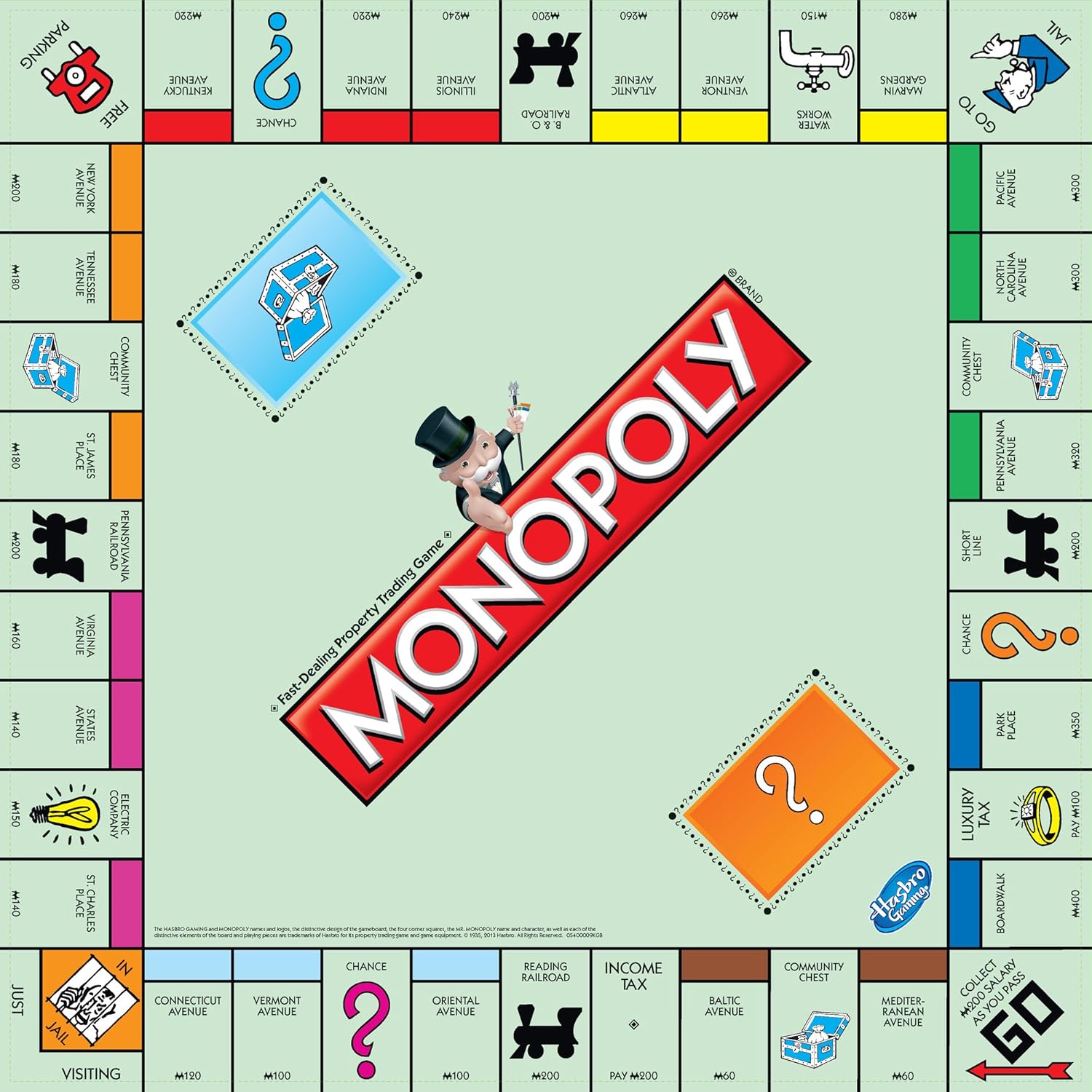
Truth is, and I know it's cliche, but I know the Monopoly board like the back of  my hand. My brother and I found an old set of my dad's in our grandmother's attic, and with no rule book to follow, we taught ourselves the game. We whiled away many summer days, while Mom was working, in the basement loaning each other money so the game would last until Labor Day. I know just where Luxury Tax is on the board and that the green spaces--North Carolina, Pacific, and Pennsylvania--are the most expensive to develop and seldom result in a winner, while the railroads--B&O, Shortline, Pennsylvania, and Reading--can provide a lot of income.

We hadn't played Monopoly in a while. All but one of the kids had moved on with their own lives, but last Saturday Allen dusted off the board and set it up hopefully in the kitchen. We actually own six versions of Monopoly--my favorite being Star Wars--but this one was the America-opoly. This version had no dog as a token, so I took the hat and began my quest around the board.

And found that, even though I knew the game and the board, I couldn't read a thing. The dots on the dice blended into one blob of something, and while the spaces were familiar, I couldn't read the price or the names. It was a bit disconcerting to realize that my continuing battle with keratoconus had cost me the ability to see the board.

Image result for monopoly board
But it had not erased my memory. Memory is a powerful thing. 2 Corinthians 2:9 tells us that God's "grace is sufficient, my power made more perfect in weakness." My eyes are weak--tender, even--but that does not mean that God has finished with me. The Apostle Paul, author of this Book, wrote that he, too, had a thorn in the flesh that kept him from becoming boastful. While it is not known just what this infirmity was, many scholars feel that it may have been a visual ailment, a notion borne out by Paul's use of scribes to write his work.

I may no longer see the Monopoly board as clearly as I once did, but I remember the hours of enjoyment playing the game. I know the game well enough that I can still play, with or without full sight. Like Paul, I have often of late mistaken what I have seen. While I have never called a high priest a "white-washed wall' (Acts 23-3-5), I have mistaken a dried leaf brought in by the dog as a mouse and just last week thought a mailbox was a man waiting for the bus. When you think about it, it can be downright funny.

It would be easy, I guess, to become bitter. As a teacher and a writer, I depend upon my vision. But I every day, I try not to let a bitter root grow (Hebrews 12:15). I know God has his plans.

As long as I can remember, I will continue to play the game.


Saturday, April 30, 2016

Voices from the Edge: Change the World

Image result for dollar storeWe have just finished Sunday dinner--a succulent roast beef with rich gravy--when Allen pushes back his chair and announces, "I need to go to the Dollar Store."

"Okay," I say. I have given up asking my autistic adult son why he needs to do things, but he volunteers the information anyway.

"What I get is going to change the world."

Wow. Pretty tall order for something that can be bought at the Dollar Store. "See you when you get back," I say as I start to stack the dinner dishes. My mind begins to wonder, what can be had for only a dollar, but has the potential to change the world. Washing dishes, up to my elbows in soapsuds, I ponder what was going on in my son's mind. Living on the upper edge of Autism Spectrum Disorder, Allen functions well at his job and is responsible about his car and his cat. But his brain works differently than mine, and while I always attempt to find meaning in what he says and does, sometimes he is downright quirky.

Something that will change the world.

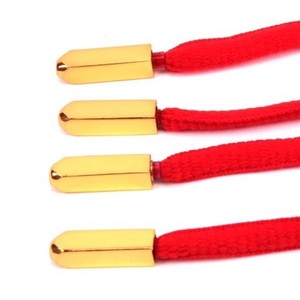
I recall small things that have made a big difference. Zippers. Velcro. Chocolate chip cookies. Those little plastic things--aglets--on the ends of shoe laces.

Dishes done, I sit down with a cup of tea and a book. A few minutes later, Allen bursts in the door, a bag in one hang. He stands in front of me with a grin and reaches into the bag. I am going to be included in changing the world. He pulls out the item and hands it to me.

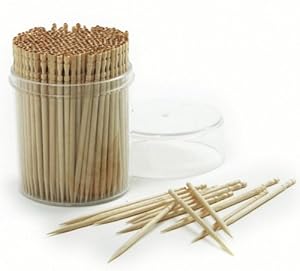
Toothpicks. A round plastic container of toothpicks.

The world is changed.

Allen bounds upstairs to work on his new computer game and I stare at the plastic container. Toothpicks? How will toothpicks change the world? I know there is some connection in Allen's brain, something that makes sense to him.

About an hour later, Allen appears in the living room, dressed in his pajamas. He scoops up his cat and settles onto the love seat.

"About the toothpicks," I begin.

He gives me a bright smile. "They're for the WHOLE family," he says, obviously pleased with himself.

"Hmm," I say. "Thanks. But I don't really understand how toothpicks will change the world."

He spares me the duh, Mom, look. "Didn't you ever get something stuck in your teeth?" he asks.

"Well, sure," I say. "Happens to everyone."

"And isn't it annoying?"

"Yeah. Really annoying."

"Just think, Mom," he patiently explains, "if all the little things that annoy people went away. Then people wouldn't feel frustrated and get in fights. We could all get along and concentrate on other things."

Allen's brain may work differently, I think, but there is nothing wrong with it. This is deep.

"So, toothpicks?" I ask.

He shrugs. "Gotta start somewhere."

And that is how Allen will change the world.

One toothpick at a time.

Sunday, April 17, 2016

Tender Eyes

Leah's eyes were tender, but Rachel was shapely and beautiful.
Genesis 29:17

"You have beautiful eyes," he said, and here Dr. Scheie paused dramatically--or at least he should have paused dramatically, because what he was about to say would have a major impact on my life--"but you have a rare and serious disease. It's called keratoconus and it deforms and destroys the corneas. I'm afraid that you have it in both eyes and while we can deter the progress, we can't cure it."

It is hard to believe that it has been forty years since I heard those words, forty years since my mother and I drove up to Penn on a wintry January day. I was nineteen at the time, a freshman at Millersville State College headed towards a teaching degree in elementary education. But headaches and blurred vision, episodes of dizziness and walking into walls had convinced my parents that something more than just a change of glasses was needed. No one expected that the appointment would reveal a disease that would ultimately become a major player in the story of my life. But our lives often have unexpected plot twists. Take, for example, Leah, in love with Jacob, who was in love with the younger daughter, Rachel. Talk about a love triangle!

Many interpretations of the Bible claim that Leah's eyes were not one of her best features, that she was cross-eyed or near-sighted or--it's possible--suffered from keratoconus. But with my own eyes both my best and my worst feature, I've always identified with poor Leah, who spent years in the shadow of her lovelier sister, Rachel. According to the Hebrew  4 Christians website, "weak eyes" is not, as some Biblical scholars have stated, a negative comment. Leah, about to be forced into marriage with much, much older Esau, wept until her eyes hurt. She prayed that she might become the mother of the righteous, and God saw her tears.

I, too, have tender eyes. Many have called them beautiful. The first words my husband ever said to me were, "You have the most beautiful eyes I have ever seen." So, of course, I married him. But having tender eyes--eyes that see through misshaped corneas--is not easy. While more is known about KC--as it is commonly called--now than 40 years ago, it is still a pretty rare disease, with fewer than 200,000 cases reported per year. Common symptoms--and yes, I have them all--include ghost images, multiple images, glare, halos, extreme sensitivity to light, and starbursts. I also have the tell-tale gold riings--Fliesher's Rings--that often come with keratoconus. While not yet proven, the disease is thought to progress with pregnancy, but I wouldn't trade Dennis, Bonnie, or Allen for 20/20 vision anyway.  15 to 20% of KC sufferers will require a transplant at some point in time; I've had two.

Image result for keratoconusLeah, my tender-eyed friend, was honored by God. It was through her son Judah that both King David--and ultimately Jesus- descended, and through her son Levi that both Moses and Aaron came. The word translated as weak in the Talmud is the Hebrew word rakkot, the plural form of rak. According to the Talmud, rak--tender--connotates royalty. Leah's eyes, whatever their condition, placed her as the matriarch of a royal line.

Years ago, when I was 19, I had no idea just how big a part KC would play in my life. I did not know that I would someday--as I have now--reach a point where certain things are no longer possible for me because of my tender eyes. I do remember this, though. I remember praying on the drive home from Penn: "Lord, I want to serve you. If I will do that better as a blind person, than so be it."

I am not blind. While my vision is distorted and severe eyestrain has become the plague of my life, I still want to serve God in whatever way He deems fit. I may not become the matriarch of a royal line, but I know that I am a child of the King.

Tender eyes and all.