Saturday, November 30, 2013

A Memory in Three Parts: Part Two

November 30, 2002.

Mom is dying. Nothing we can say or do will change that. Last night, pouring over family photo albums and telling stories about her, we had come to terms with it. And while it had taken us until dawn to decide, we know we are making the right choice. She has lived her life with dignity and fortitude. We will allow her to die the same way.

The small hospital room is full of people now: the nurse who will turn off the machines that are keeping Mom’s heart going, the doctor who will monitor her response, my brother, my father. One of the nurses has given me a memory box. Into it I tuck a few of the cards from the windowsill, a yellow rose from the bouquet Dad brought in, and a locket of her hair. “Her rings, too,” says my father. He is kneeling by the bed, his hands holding onto hers. I nod and he moves over, releasing her left hand to me.

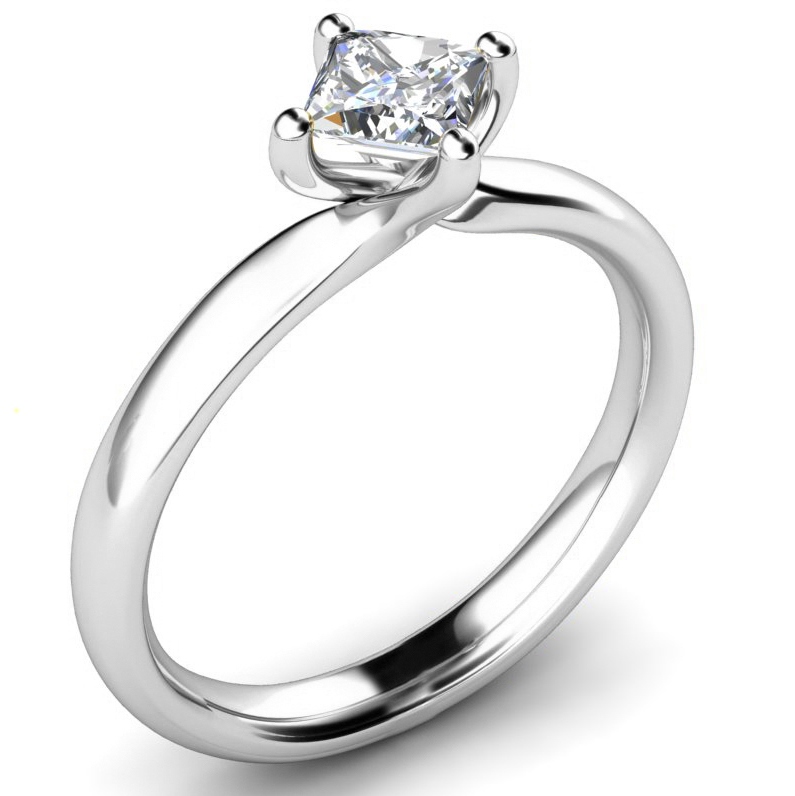
Her hand is cool to my touch, the skin paper thin, the blood vessels blue against the pale ivory. In the real world, Mom is olive skinned, but here she takes on the pallor of a ghost. Her knuckles are swollen with arthritis. I kiss her hand gently, the white gold of her engagement diamond brushing my lips. Carefully, not wanting to cause her any discomfort, I slide the tiny ring off her finger. Her hand smells faintly of Jergens lotion; she kept a bottle by the sink, lathering the lotion onto her hands after doing the dishes, the diamond ring safely in a china dish. For a moment, I hold the ring in my hand. It is still Mom’s, still carries with it the memories of childhood; the ring glinting in the sun as she hangs sheets in the summer sunshine; the ring sliding through my hair as Mom plaits my braids; the ring catching on my sweater as I kiss her goodbye. I place it into the memory box lovingly and draw in my breath. The wedding ring will follow it.


But now Dad stops me. His voice chokes, but his words are clear. “I put the wedding ring on her,” he says. “I will take it off.” I slide over by the bed, allowing Dad access now to her left hand. On the other side of the bed, my brother, Harvey, holds her right hand. Dad takes Mom’s hand and raises it to his lips. He kisses every finger, the palm, the swollen knuckles. Then he speaks to his wife. “Betty, “ he says, “52 years ago, I put this ring on your finger and you became my wife. I am taking this ring off now, but it does not mean you are not my wife. Forever and always, you will be my wife.” Then he slides the ring off and it joins the other mementoes in the box.

Dad nods to the nurse, who flips the machine to off. Mom’s chest continues to rise and fall. It could be hours, it could be days, the doctors have told us. My brother and I have decided, however, to say our own goodbyes now. Each of us, in turn, gives Mom one last hug, one last kiss. Then, arms around each other, we depart. The final goodbye must belong to Dad.

We stand outside, however, seeing our parents through the room’s window: Mom lying on the bed, the last  breaths escaping from her body as she eases her way out of this world, and Dad, his head buried in her shoulder, reluctant to let her go. After a few moments, he raises his head, kisses her on the cheek, and kneels with her hand in his.

This is love, I think. Not the fairytale, happily ever after love that people find  impossible to emulate. This is the love that has survived life, two children, lost jobs, financial burdens, illnesses. This is what my brother and I will take with us today, as we leave Mom and Dad to their final goodbyes and each of us returns to our own often difficult lives. The trappings of love may be superficial, but love—enduring, pure love—needs nothing else.


Thursday, November 28, 2013

Memory in Three Parts


November 30, 2002. 9AM

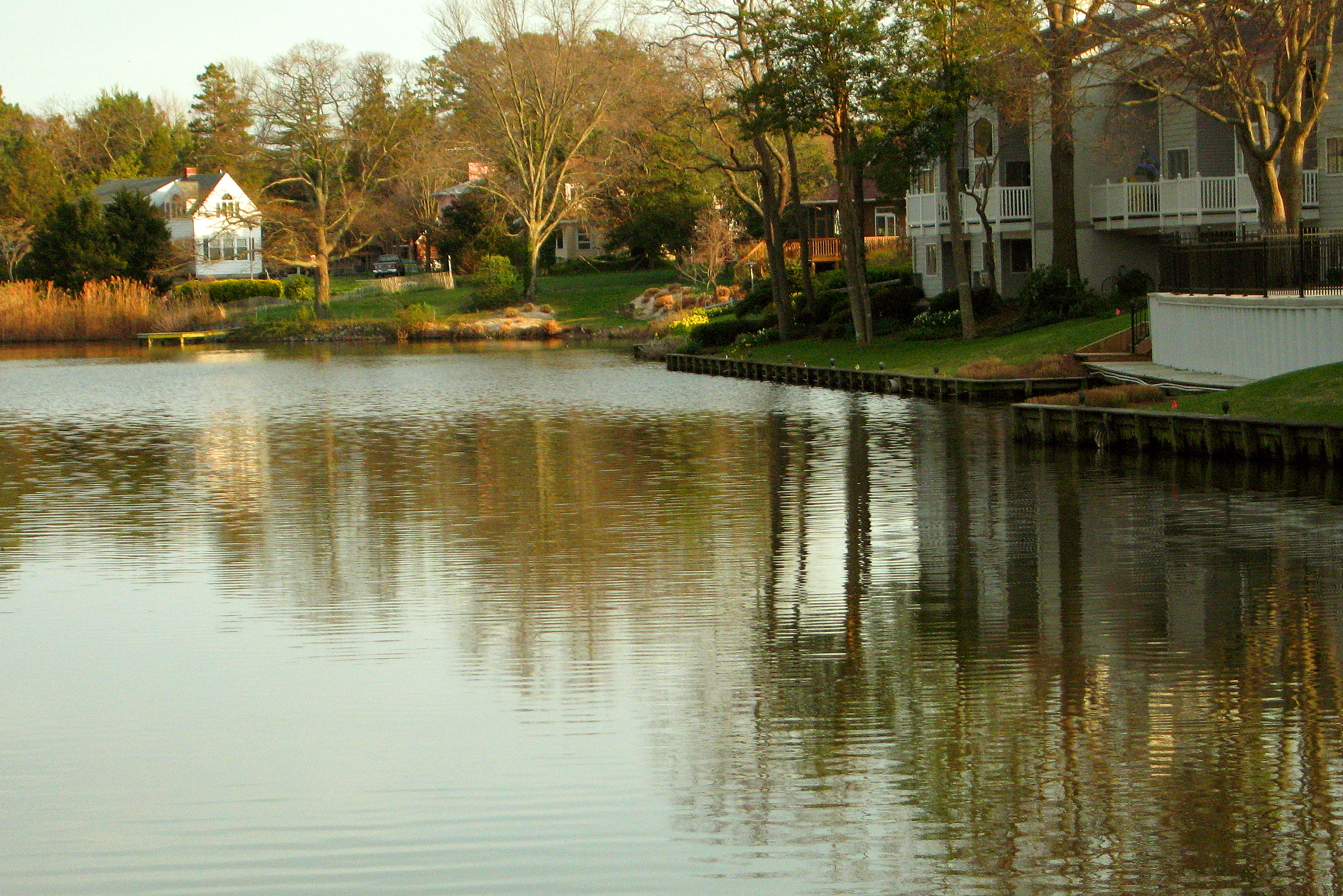
Saturday morning in Rehoboth. I have done the breakfast dishes at Mom's sink, looking out at the end of Silver Lake that abuts the property, a view that Mom loves. It is just cereal bowls and coffee cups and little plates for the Pillsbury cinnamon rolls that Mom bought and thought we would all eat together this morning after Black Friday. My brother, Harvey, teased me about the orange icing but has eaten two anyway. This is Mom's sink, I think. It will always be her sink. And suddenly I need to be outside, watching the ducks, walking where Mom loved to walk.


It is bitterly cold outside and everyone else in the house is still getting themselves ready for the hospital vigil. Dad has left early. I walk to Silver Lake, down to the ancient wooden bench that once sat in Pop Pop's garage on Washington Street and which Nanny threatened to have hauled to the dump on a weekly basis. It did make it there once, I recall, but PopPop turned around and retrieved it. Now the plain bench, showing at least three different layers of paint, sits at the edge of the lake, a place for Mom to rest her bad hips while she watches the ducks. It has always been Dad's dream to have a house on Silver Lake and while Harvey and I are astounded at the speed in which they sold the family house in Swarthmore and ran away from home, I am glad they had these few years in Rehoboth, within the sound of the ocean's lapping waves and the whisper of pine trees. They have been contented here. Mom has her ducks to feed and worry about, especially in the spring when the turtles eat the newborn ducklings and drive the duck families away. Sitting here on the bench that is part of Pop Pop's past, I watch the ducks swim, recalling the night long ago when Mom stayed up all night and watched a baby bird cling to the nest his mother had plastered to our attic window. She worried all night, as the wind blew and the rain fell, that the baby bird would tumble from his nest and die. But God watched over Mom's little bird and in the morning it was still safe in its nest.


I talk to the ducks for a few minutes, telling them about Mom. She won't be coming down to feed them anymore, but Dad will make sure they are supplied with bread. Then I heave myself off the bench--it is really too cold to be sitting--and walk back up the hill, the dry leaves crunching under my sneakers. Tears freeze to my face by now but I cannot go back inside. Not yet. I continue up the driveway, up to School Lane, down the old high school where Harvey and I rode our bicycles over the paths and around the school. A soft, summer wind brushes past my face and I can hear the sounds of children calling to each other. "Linda! Watch me! Can you do this?" and the resounding laughter. There are the tennis courts where we brought our badminton rackets. There are the swings and the tower where we played weather station. Then, around the corner, past the condominiums that were not here thirty years ago, through the stand of pines and picnic tables where students lucky enough to live at the beach eat their lunches outside, to the bridge across Silver Lake.

The bridge, too, has changed, from roughly hewn planks of wood my mother used to fear for us to ride across to a sturdy structure with rails. The old bridge would hold only one bike at a time, steered carefully down the narrow and rail-less planks. We would hold our breaths as we crossed it, Harvey and I, not really fearing the splash into the water--all of three feet deep--but knowing Mom would panic if we came home drenched. Mom never liked bridges and would drive miles out of her way to avoid one.

In recent years, Dad has convinced Mom of the safety of this bridge. Almost every night, they walk across it, hand in hand, stopping in the middle to admire the lake and the ducks and their own good fortune at being together after so many years.

Now, Dad will walk it alone.

Across the bridge is a small park that was a golf course when we were young. Balls would sometimes sail across the narrow expanse of water and we would collect them in our bike baskets, bringing them back to the house on Washington Street to be used in our own miniature golf courses, made with spare wood from Pop Pop's garage. Along the pathway from the bridge are two stone benches, one in memory of Nanny, one for PopPop. Dad says he often sits here to talk to his parents, although he has not yet come to tell them about Mom. I cross the bridge now, stopping at each bench to caress it and read the name engraved on each stone. Elva M. Waltersdorf. Harvey R. Waltersdorf. I tell them what Dad has not been able to, that Mom will shortly be joining them in Heaven. 

Back across the bridge. Up the path. Around the school, memories of my summer childhood calling out to  me. All of them at the house will be ready now to return to the waiting room outside the ICU.

Let me be strong enough, I pray. Let me be strong enough for Dad and Harvey and Mom today.

Tuesday, November 26, 2013

Hearts Are WIld

 November 26, 2013

"Now, where do you come from?" the Queen of Hearts says to Alice.

 Alice replies, "Well, I am trying to find my way home."

"YOUR way?" retorts the Queen. "All ways here are my ways!"

Thus ensues a ridiculous game of croquet with hedgehogs being used as the balls and playing cards as the wickets. It is an unlikely game, filled with misadventure and threats of "Off with her head!" issued by the angry Queen. And all poor Alice wants to do is get herself out of that danged rabbit hole and back home.

It is all most of us ever want, but sometimes we need to put up ridiculous and seemingly meaningless rituals to get there.

We are on our way home, home from the hospital and the last of the tests Ron needed to endure before he could get the clearance for the ketamine infusion therapy. The tests have taken most of the day and involved a stress test, a tilt table test, and other measures of cardiac health. I have held my own breath the entire time, remembering that many, many people are praying for a positive outcome. As my friend Madeline told me on Sunday, "This will work because it HAS to work."

It has to work, it has to work, it has to work. That was the mantra as we headed up to the hospital and negotiated the morning rush hour traffic on Broad Street. It is to work it has to work, it has to work. We are the Little Engine that could, Little Toot the tugboat out on the foggy ocean, the Brave Little Toaster. We are the epitome of Alice and Dorothy and Luke Sywalker, trying to find our way back to a world we once knew, one that made sense to us.


Hearts are tricky things. They are the central organs of our bodies, the one that keeps us moving and living and loving. But, according to the ancient Egyptians, they are also the seat of our emotions and breakable. Hearts can be affected by our diet, our exercise, and our lifestyle. They can be transplanted successfully from one human being to another. But scientists have not get found a way to live without one. Even the Grinch had a heart, albeit a small one. But, as you will recall, his heart grew and grew and grew when he, too, finally found his way back home.

Years ago, when the infections that have always plagued Ron during his many hospitalization began to affect his heart, we were told that the damage was irreparable. An enlarged heart works harder to pump the blood. Four years ago, we were told that Ron's heart was working at about 12% capacity, making him out of breath all the time. We resigned ourselves to it. Ron endured another surgery to have a pace-maker/ defibrillator   inserted. Of course there were complications--there always are--and the simple two hour procedure took five and resulted in another infection. Ron carries a card in his wallet in case his bionic powers sets off alarms in stores and airports. But in the last four years, the defibrillator has never gone off.

Yesterday was the ultimate test. As the doctors at Hahneman Hospital put Ron literally through the ringer, I continued the mantra. It has to work, it has to work, it has to work. Finally, by 4 o'clock, the doctors exited the exam room, clearly puzzled.

"We can't find anything wrong," they said.

What's that, now? I am not sure I recognize the words. They sure sound like English, but I am not used to hearing them.

"We even called his cardiologist--Dr. Lee--and she faxed us his records. His heart was damaged, no doubt. But from what we can see, well, we don't really know how to explain this, but, his heart looks okay." They shake their heads, these three men in white coats. They look at me expectantly. Surely there is a rational explanation for this?

I shrug my shoulders. "Everyone we know has been praying," I say. They nod, unconvinced.

"Well, " they say, "there's no reason we can't put him into the ketamine program."

Hearts are tricky. They can be damaged and scarred and still keep on beating. They can suffer attacks and come back to function again. They can break and they can heal. They can hope and love and never ever stop believing that somewhere out there is a place called home.

It has to work, it has to work, it has to work. We are now several steps closer to what we hope will be our own way back.

To all who are praying, who have upheld us these last thirteen years, who have never given up hope, accept our deepest gratitude. We are not there quite yet. But, like Alice when she finally realizes just how ridiculous the Queen of Hearts and her court are, we are finding our way back.

We may yet find our way out of the rabbit hole.


Sunday, November 24, 2013

Turf War

I like to knit. No, really, I LOVE to knit. Knitting gives me control that does not exist in the rest of my life. When I knit, I am in charge of the pattern, the colors, the stitches. I love the feel of the yarn between my fingers, the click of my needles as they create the fabric, and the satisfaction of making something from nothing. Even when I am not knitting, I am thinking about my next project, mentally listing the materials I will need and the colors that will work best. Knitting is my refuge. In my very busy, hectic, and crazy life, it is knitting that keeps me sane.

But knitting has some minimal requirements: a good light, space to spread out your yarns, markers, and patterns, and a comforting cup of tea. Not much to ask, one would think. One would be surprised.

A favorite time to knit is on Sunday afternoons, when my husband is engrossed in some CNN sports game or other. I can be passively engaged with him--paying absolutely no attention to the field of play--and still fulfill my need for calm and beauty. For the last year or so, the left side of the couch has been my knitting nirvana, complete with a crafter's light and a side table for my accouterments.

But about two months ago, my husband decided to take over the left side of the couch. The view of the TV was better from there, he said. So, reluctantly, I moved my knitting lamp and my various tools and took up residence on the love seat. The view of the TV was not so good, but who cared? I could spread out on the love seat, even kicking off my shoes and taking over the second seat. Ah, comfort.

Let me explain right here that my husband and I still live in the same starter home where we swore we would spend the first five years of our married life. We've raised three kids here, two of whom have returned home to roost due to the lousy economy, bringing with them one cat each. My former office--fortress of solitude for my budding writing career and consistent teaching stuff--has been given over to a daughter who swears she's leaving next June. I believe her. I also believe that her cat, a large orange with depressive tendencies, will stay. So space in our small abode is at a premium. Whenever I manage to carve out a tiny space for myself, I need to be on guard against squatters. And since I work about 60 hours a week, I cannot stand guard with a rifle over my minuscule domain. I have trained my cocker spaniel, Taffy, to do it but she's weak and can be bought for a bacon treat.

Back to my dilemma. I settled into my new knitting space quite well. It had the benefit of being near a vent which kept me warm when the weather outside got frightful. I could throw a blanket around myself and knit the Sunday happily away.

Perhaps I was too comfortable. Perhaps I made it look too inviting. Because today, my husband sacked himself out on the love seat instead of the usual side of the couch.

"That's not where you sit," I told him.

He shrugged. "We don't have assigned seats."

"But this is where I knit. This is where the light is good and my knitting things are all here."

"There's enough space," he said. "You can still knit."

I had my doubts. While a very portable hobby, knitting does require a certain amount of elbow room and my husband is not a small man. Still, I was willing to give it a try. First, I needed to move a cat--not the depressed one--onto the floor, then re-position the light because it was, alas, casting a glare onto the TV. Heaven forbid. I settled onto the 1/3 of the love seat left and found that I could almost move my arms. Not quite, though. After a few minutes of close quarters knitting, I gave up.

"This will not work,' I announced. "I need ROOM!"

"Sit on the couch, " my helpful husband suggested.

"I can't," I wailed. "There's not enough light."

"You used to sit there."

"Yes. Until you wanted to sit there. Then I had to move my lamp over here. Now you want to sit here!"
Okay, I know I sounded petulant. So sue me.

He sighed. Not just a little, ahhh, sigh. But a loud, I-am-the-most-put-upon-husband-on-the-face-of-the-earth sigh. "I could move," he said.

"Yes. Please." He heaved himself off the couch and I made a quick trip to the restroom. When I came back, he was still sitting on the love seat, my just-begun project disappearing under the cushion.

"You said you were moving!" I said.

"You left the room!" he countered.

"Well, I'm back," I said. "Move!" At a speed that matches that of paint drying, he heaved and hooed and sighed and groaned and made it to the couch. Plop. "Don't know why you're making such a big deal out of it," he muttered.

"Just so we're clear," I said to my husband. "When I am knitting, I sit here."

He grunted, already back into whatever game he was watching.

So, for the moment, my space is once again secure. But tomorrow will come and I will need to go to work and my unreliable dog will undoubtedly sell me out for bacon treats. But I have a plan, a strategically planted spare knitting needle between the cushions. And not a plastic one either.

That's another reason I knit: sharp points.


Tuesday, November 19, 2013

A Warm Stone


7/17/2007
 
A WARM STONE


The only thing that has not changed in Rehoboth is this cemetery, where Mom’s ashes still rest beneath the gray granite carved with ducks and light houses. 305 School Lane is in upheaval with mounds of dirt and plastic coverings everywhere. Peg and Dad will wed in November, and Peg will move here with her two cats, Tom and Ginger. She will be my stepmother, but I doubt that I will ever think of her that way. In my mind, they will be Dad and Peg, just as to her children they will be Mom and Harvey.


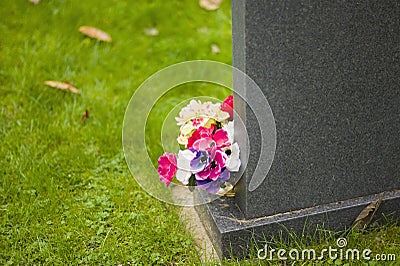
Mom's grave is no longer my first stop in Rehoboth. I know that Mom will still be here, waiting, certainty among so many changes. But just now Bonnie and I have taken a few minutes to visit Epworth Cemetery, bringing with us yellow roses and brightly colored stones. “Grandmom liked bright colors,” she told me a few moments ago when she purchased the stones at the boardwalk. I note that the violets need weeding and there is a stain on Mom’s headstone. The Windex in my car is not capable of removing it; it will require Dad’s effort with a Brillo pad. I arrange the flowers in a holder and Bonnie lays the stones along the ledge of the headstone. Then we wander over to a new stone. One thing we like about this cemetery is the diversity of memorials. Near Mom is one that says, “I told you I was really sick!” and another boasts a bench engraved with, “Sit a while.” The new stone confuses us: the date says this woman, Margaret, died in 2005. Yet we are sure the grave was not here at Easter. Something else to quiz Dad, who knows everything that is going on in Rehoboth.


We do notice this about the mysterious Margaret, however. There are two vases, one on each side of her headstone, but the flowers in them have long since died.


“That’s sad,” notes my daughter. We glance back at Mom’s grave, with its abundance of bright flowers and stones. “Do you think Grandmom would mind…” Bonnie begins. I nod, of course. So some of Mom’s flowers and stones migrate over to Margaret’s grave. I pull the dead flowers out, brush aside some fallen leaves. In a few moments, the grave of the unknown woman is looking cared for. Later on, Dad will tell us that Margaret’s husband lives in Florida and only gets up twice a year. We will resolve to always bring flowers to Margaret.


We stop before leaving to say good-bye to Mom. Five years ago, this grave was not here. Now, so many things in life have changed. Mom was never particularly good at change, but she was a woman of warmth and courage.


I whisper my burdens to her. Ron is still bearing the results of the car accident, suffering with bi-polar disorder. The work of my doctorate sometimes overwhelms me. I carry much on my shoulders. Dad is so wrapped up with his new life with Peg that I sometimes feel orphaned. There is no one I can really turn to, really sob to, no one who puts me first in their life, the way that mothers do.


The bright stones Bonnie has arranged on the ledge of the headstone wink at me in the sun. I touch one, surprised that it is already warm from the July heat. I fold my hand around it, let it nestle in my palm. Then I fold my fingers over it and tuck it into the pocket of my shorts. It nestles there, a small and warm weight, a reminder of the love my mother had for me, the love she shared with so many.


I straighten from the grave, giving one last tweak to the flowers, brushing my fingers over the carved name, Elizabeth Virginia Waltersdorf, whispering, as I always do, “Love you. Miss you.” Bonnie and I are off the join the rest of the family on our wild and wacky crazy Cobourn week end. But the stone remains in my pocket, a warm token of a mother’s love.


I have many miles yet to go, and many people who need and depend on me as I once did my mother. The stone will help me remember that one day I will lay these burdens down.


It is warm and small and light. I can easily carry its weight for a while.

Sunday, November 17, 2013

How Great is Our God!

Pastor gave me some words this morning and asked if I could arrange them into "something" for our hymn sing tonight. Here is what God gave to me:

HOW GREAT OUR GOD!

            The greatness of our God is seen
-in sky
-in sea
-in forest green

Living creatures, great and small
Reveal the God
Who made them all.

Unbelievable, inconceivable
Is the greatness of our God
He knows us
And enfolds us
-When times are cold
-When we get old.

Living creatures, great and small,
Reveal the God
Who made them all.

Our thoughts are known
To our mighty King
When we hurt
When we sing

He provides for our every need
Our every act
Our every deed

He will never leave us, nor forsake.
Our creator makes
No mistakes.

Living creatures, great and small,
Reveal the God
Who made them all.

Our Savior will return
And joy will fill our hearts
In the moment we will know
From God
We will never part.


Worthy, worthy, worthy
Is the God of our worship
He is worthy of our praise!
Magnify Him with Thanksgiving
Gladly our voices we raise!

Living creatures, great and small
Reveal the God
Who made them all.


Arranged by Linda Cobourn, from words provided by Robert Kauffman


This is the One

To my daughter and my almost son-in-law, who have found each other.


THIS IS THE ONE
This is the one who
                Will fold my daughter’s life into his own
                Will stand at the front of the church, waiting expectantly
                                As she appears in the doorway
                Will take her hand in his, sliding a circle of white-gold onto her finger
                                And making a promise he will never break
This is the one who
                Will find a house halfway between his and hers
                Will arm wrestle her bedroom furniture down our winding stairs
                                And into a borrowed pickup truck
                Will let her hang brightly colored curtains at all of the windows and
                                Tissue paper stained glass made by her pre-school class

This is the one. The one who
                Will show up for holiday dinners and family birthdays
                Will answer the phone when I call, holding it at arm’s length and shouting,
                                “It’s your mother!”
                Will accept that time with her does not belong to him alone.
He is the one who will
                Hold her hand as she labors in childbirth, buckle my grandchild into a car seat, and make sure to teach truth and light
This is the one who
                Will laugh when she laughs,
                Hold her when she cries, wiping each tear from her freckled face
                And tell her that of course she does not look fat in those jeans because she is perfect.
And he will mean it.
This is the one who will, in the inevitability of life’s harsh realities,
                                Stand beside her at a grave side
                                Pulling her to him as she says good-bye

                                Not caring that she stains the lapel of his good black suit—his only black suit—with     
                                                Her streaked eye shadow.
Because this is the one who
                Despite heart-breaks and broken dreams and lost chances and love left behind in a deep, long, valley of hurt,
                God has brought to her.
In the vastness of a universe often lacking in the essential ingredient of compassion, it is not really one person, one man, one woman
But God
                Who is
                The One.