Showing posts with label Mom. Show all posts

Sunday, December 1, 2013

A Memory in Three Parts: Part Three

December 1, 2002. 5PM

It is growing dark outside when I leave the hospital and the cold air, holding a promise of snow, nips at my  nose. I have post-poned this last leave-taking as long as I can; now the red streaks of the setting sun on the horizon make it unlikely that I will return to the beach house before twilight descends and will be driving down Route 1 at a time when my vision is at its worst. Still, I am reluctant to make this final departure. A hundred times, as I sit in the parking lot, I am tempted to return to the vigil at Mom's bedside, holding onto her fragile hand and listening to her labored breathing, knowing that before long her brain will stop sending signals to her heart to beat and her lungs to fill with air.

I cry openly on the drive home, alone in the car. The rest of my family--husband and children--wait at the beach house, suitcases packed and ready. Mom no longer inhabits the body that lies in the bed at BeBe Hospital. Dad and I have debated this at her bedside. Is she already in Heaven or is her soul lingering with us for a while longer? We have come to no conclusion. The doctors tell us that "the lights have gone out" for Mom and she is no longer aware of what is around her. The nurses, though, seem to think that even those who are comatose can hear our voices, so we have kept up a cheerful line of chatter for the last three days Sometimes we cried and told her how much we will miss her, and sometimes we laughed with stories from our life as a family. Before I leave her for the last time, I kiss her and assure her that I will take care of Dad. Then I leave, my heart breaking.

Harvey has already left for his long and lonely drive back to North Carolina. Both of us have volunteered to stay with Dad, but he has insisted that we go back to our own lives. He will sit by the side of his wife of 52 years. His own good-bye to her will be private.

December 2, 2002. 8AM

I have just returned home from school where I told the principal about my mother. He has sent me home and insisted that I not return until the end of the week. The light on the answering machine is blinking.
"Linda? This is Dad. Mom passed away at 6:45 this morning."

Saturday, November 30, 2013

A Memory in Three Parts: Part Two

November 30, 2002.

Mom is dying. Nothing we can say or do will change that. Last night, pouring over family photo albums and telling stories about her, we had come to terms with it. And while it had taken us until dawn to decide, we know we are making the right choice. She has lived her life with dignity and fortitude. We will allow her to die the same way.

The small hospital room is full of people now: the nurse who will turn off the machines that are keeping Mom’s heart going, the doctor who will monitor her response, my brother, my father. One of the nurses has given me a memory box. Into it I tuck a few of the cards from the windowsill, a yellow rose from the bouquet Dad brought in, and a locket of her hair. “Her rings, too,” says my father. He is kneeling by the bed, his hands holding onto hers. I nod and he moves over, releasing her left hand to me.

Her hand is cool to my touch, the skin paper thin, the blood vessels blue against the pale ivory. In the real world, Mom is olive skinned, but here she takes on the pallor of a ghost. Her knuckles are swollen with arthritis. I kiss her hand gently, the white gold of her engagement diamond brushing my lips. Carefully, not wanting to cause her any discomfort, I slide the tiny ring off her finger. Her hand smells faintly of Jergens lotion; she kept a bottle by the sink, lathering the lotion onto her hands after doing the dishes, the diamond ring safely in a china dish. For a moment, I hold the ring in my hand. It is still Mom’s, still carries with it the memories of childhood; the ring glinting in the sun as she hangs sheets in the summer sunshine; the ring sliding through my hair as Mom plaits my braids; the ring catching on my sweater as I kiss her goodbye. I place it into the memory box lovingly and draw in my breath. The wedding ring will follow it.


But now Dad stops me. His voice chokes, but his words are clear. “I put the wedding ring on her,” he says. “I will take it off.” I slide over by the bed, allowing Dad access now to her left hand. On the other side of the bed, my brother, Harvey, holds her right hand. Dad takes Mom’s hand and raises it to his lips. He kisses every finger, the palm, the swollen knuckles. Then he speaks to his wife. “Betty, “ he says, “52 years ago, I put this ring on your finger and you became my wife. I am taking this ring off now, but it does not mean you are not my wife. Forever and always, you will be my wife.” Then he slides the ring off and it joins the other mementoes in the box.

Dad nods to the nurse, who flips the machine to off. Mom’s chest continues to rise and fall. It could be hours, it could be days, the doctors have told us. My brother and I have decided, however, to say our own goodbyes now. Each of us, in turn, gives Mom one last hug, one last kiss. Then, arms around each other, we depart. The final goodbye must belong to Dad.

We stand outside, however, seeing our parents through the room’s window: Mom lying on the bed, the last  breaths escaping from her body as she eases her way out of this world, and Dad, his head buried in her shoulder, reluctant to let her go. After a few moments, he raises his head, kisses her on the cheek, and kneels with her hand in his.

This is love, I think. Not the fairytale, happily ever after love that people find  impossible to emulate. This is the love that has survived life, two children, lost jobs, financial burdens, illnesses. This is what my brother and I will take with us today, as we leave Mom and Dad to their final goodbyes and each of us returns to our own often difficult lives. The trappings of love may be superficial, but love—enduring, pure love—needs nothing else.


Thursday, November 28, 2013

Memory in Three Parts


November 30, 2002. 9AM

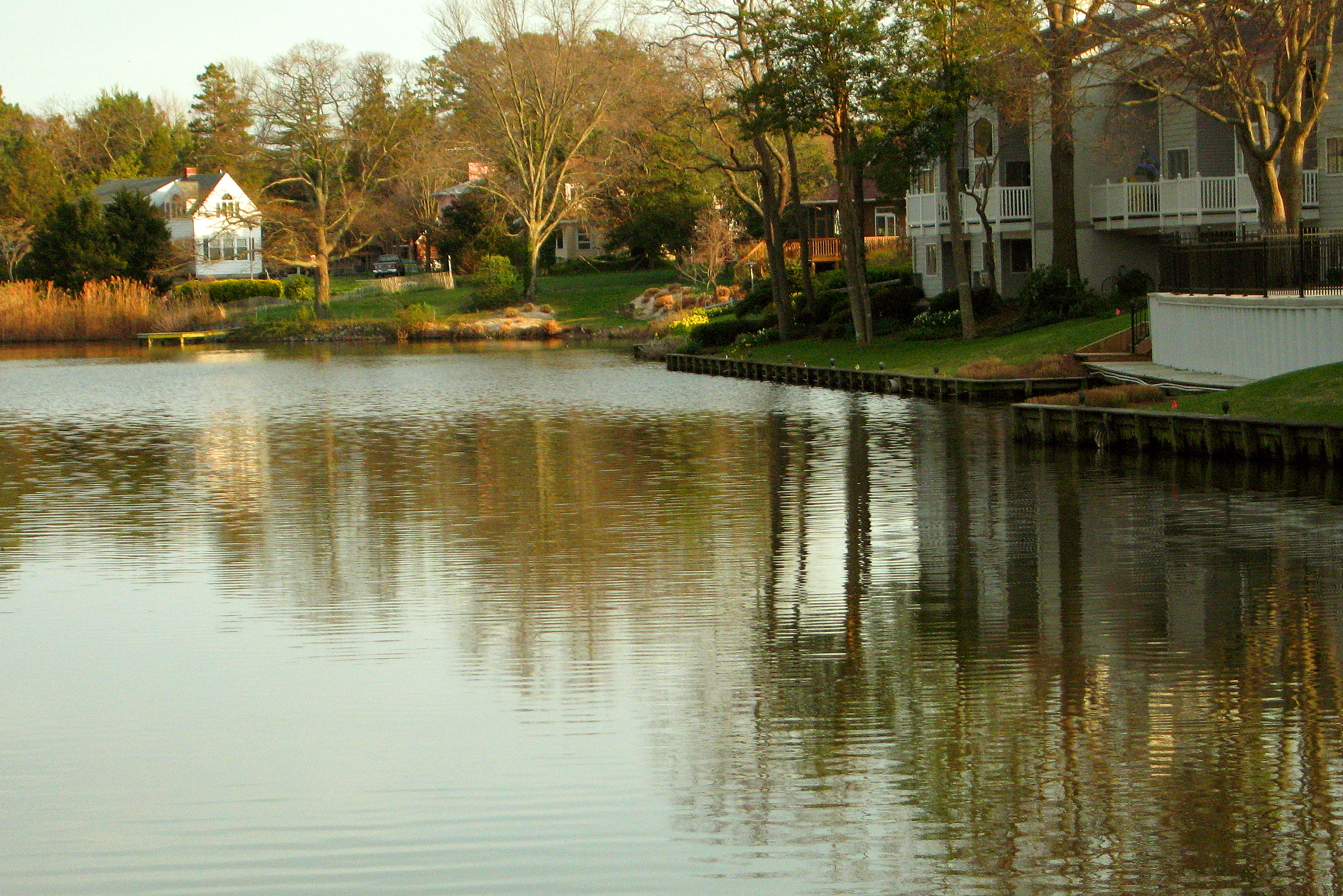
Saturday morning in Rehoboth. I have done the breakfast dishes at Mom's sink, looking out at the end of Silver Lake that abuts the property, a view that Mom loves. It is just cereal bowls and coffee cups and little plates for the Pillsbury cinnamon rolls that Mom bought and thought we would all eat together this morning after Black Friday. My brother, Harvey, teased me about the orange icing but has eaten two anyway. This is Mom's sink, I think. It will always be her sink. And suddenly I need to be outside, watching the ducks, walking where Mom loved to walk.


It is bitterly cold outside and everyone else in the house is still getting themselves ready for the hospital vigil. Dad has left early. I walk to Silver Lake, down to the ancient wooden bench that once sat in Pop Pop's garage on Washington Street and which Nanny threatened to have hauled to the dump on a weekly basis. It did make it there once, I recall, but PopPop turned around and retrieved it. Now the plain bench, showing at least three different layers of paint, sits at the edge of the lake, a place for Mom to rest her bad hips while she watches the ducks. It has always been Dad's dream to have a house on Silver Lake and while Harvey and I are astounded at the speed in which they sold the family house in Swarthmore and ran away from home, I am glad they had these few years in Rehoboth, within the sound of the ocean's lapping waves and the whisper of pine trees. They have been contented here. Mom has her ducks to feed and worry about, especially in the spring when the turtles eat the newborn ducklings and drive the duck families away. Sitting here on the bench that is part of Pop Pop's past, I watch the ducks swim, recalling the night long ago when Mom stayed up all night and watched a baby bird cling to the nest his mother had plastered to our attic window. She worried all night, as the wind blew and the rain fell, that the baby bird would tumble from his nest and die. But God watched over Mom's little bird and in the morning it was still safe in its nest.


I talk to the ducks for a few minutes, telling them about Mom. She won't be coming down to feed them anymore, but Dad will make sure they are supplied with bread. Then I heave myself off the bench--it is really too cold to be sitting--and walk back up the hill, the dry leaves crunching under my sneakers. Tears freeze to my face by now but I cannot go back inside. Not yet. I continue up the driveway, up to School Lane, down the old high school where Harvey and I rode our bicycles over the paths and around the school. A soft, summer wind brushes past my face and I can hear the sounds of children calling to each other. "Linda! Watch me! Can you do this?" and the resounding laughter. There are the tennis courts where we brought our badminton rackets. There are the swings and the tower where we played weather station. Then, around the corner, past the condominiums that were not here thirty years ago, through the stand of pines and picnic tables where students lucky enough to live at the beach eat their lunches outside, to the bridge across Silver Lake.

The bridge, too, has changed, from roughly hewn planks of wood my mother used to fear for us to ride across to a sturdy structure with rails. The old bridge would hold only one bike at a time, steered carefully down the narrow and rail-less planks. We would hold our breaths as we crossed it, Harvey and I, not really fearing the splash into the water--all of three feet deep--but knowing Mom would panic if we came home drenched. Mom never liked bridges and would drive miles out of her way to avoid one.

In recent years, Dad has convinced Mom of the safety of this bridge. Almost every night, they walk across it, hand in hand, stopping in the middle to admire the lake and the ducks and their own good fortune at being together after so many years.

Now, Dad will walk it alone.

Across the bridge is a small park that was a golf course when we were young. Balls would sometimes sail across the narrow expanse of water and we would collect them in our bike baskets, bringing them back to the house on Washington Street to be used in our own miniature golf courses, made with spare wood from Pop Pop's garage. Along the pathway from the bridge are two stone benches, one in memory of Nanny, one for PopPop. Dad says he often sits here to talk to his parents, although he has not yet come to tell them about Mom. I cross the bridge now, stopping at each bench to caress it and read the name engraved on each stone. Elva M. Waltersdorf. Harvey R. Waltersdorf. I tell them what Dad has not been able to, that Mom will shortly be joining them in Heaven. 

Back across the bridge. Up the path. Around the school, memories of my summer childhood calling out to  me. All of them at the house will be ready now to return to the waiting room outside the ICU.

Let me be strong enough, I pray. Let me be strong enough for Dad and Harvey and Mom today.