Friday, April 3, 2015

Scenes from a Hero's Life


Written in July, 1998, at the Pennsylvania Writing Project

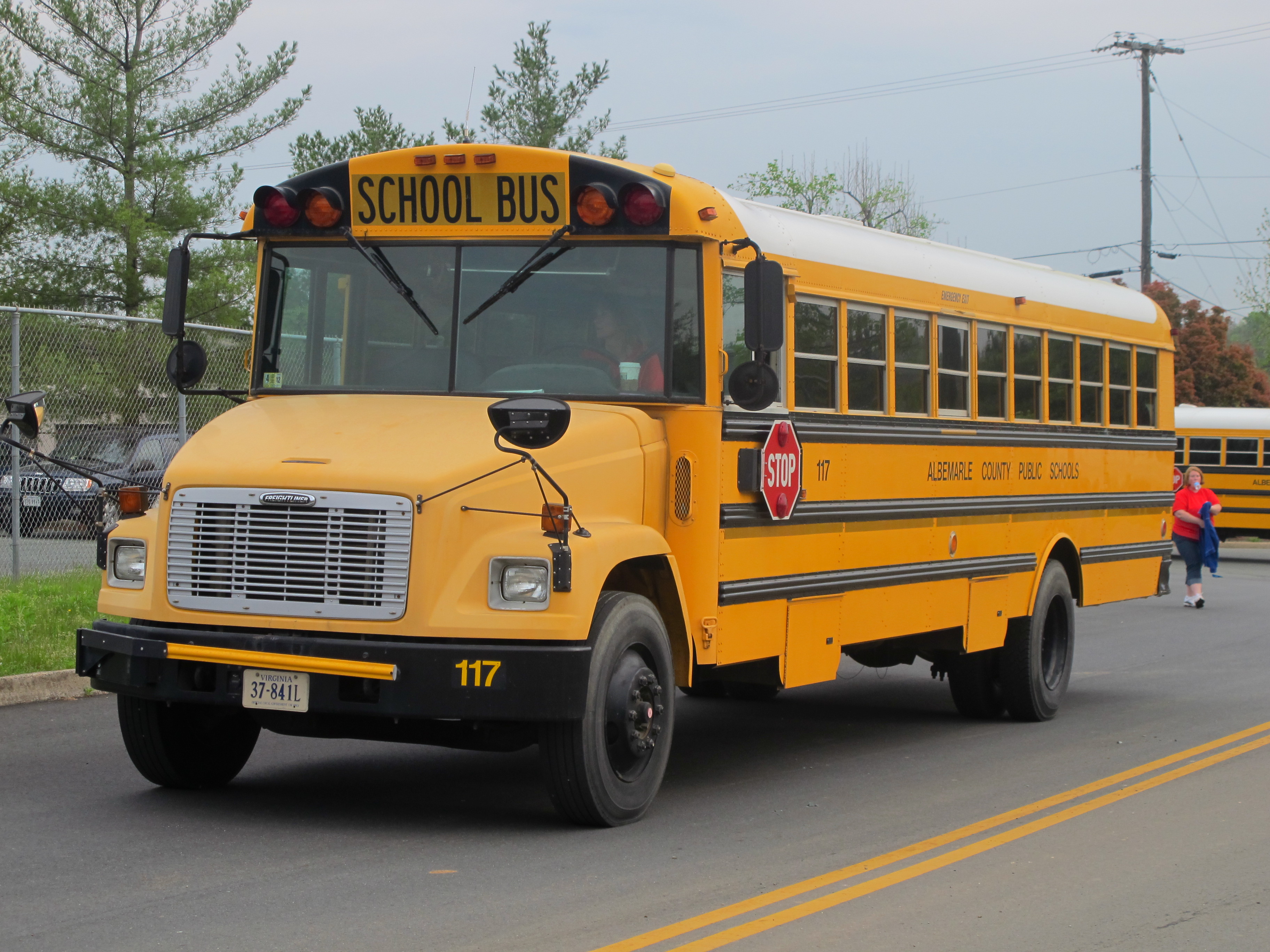
He's tall for his age, but with a gangling awkwardness frequent to adolescents, his arms and legs sometimes refusing to obey his brain's commands. Every morning, he hesitates just a moment before boarding the school bus, giving a quick glance back towards his house and taking a deep breath. He's been pushed on the steps, both getting on and off the bus, and there's still a bruise on his knee from last week's shove. But he steadies himself, adjusts the book bag, and marches to his seat. He sits alone. It is rare for another adolescent to sit with or talk to him. The bus driver smiles encouragement. She never has to yell at him for being out of his seat or throwing things. As she pulls the bus away from the curb, she sees him give a tentative wave to a passing car. Mom always waits until he is safely on the bus before leaving for work.

At school, he will find some camaraderie with others similar to himself. There is the small classroom in the corner by the library, he will struggle to read and write and learn. He will hold himself close to the wall as he passes in the hallway, memories still fresh of books being pushed out of his arms and scattered across the floor and trampled. In the cafeteria, he sill sit with Norman or Robby or Justin, other outcasts in the middle school ruckus. He will eat his lunch quietly and nearly, never having to be told to pick up his trash or put away his tray.
Image result for basketball net
And when he gets home and finishes his homework and chores, he will run out to his basketball court and spend hours making free throws and dunk shots. Here, his IQ and reading ability do not matter.

Tomorrow, he will do it all again, not complaining, simply accepting that for him it is all a little harder and will take a little longer. But he will do it again because he is a hero.

Maybe he's the student in your class that seems to be a loner, or the boy down the street who can't quite keep up with the others. Perhaps you've seen him riding his old bike up and down the streets alone. Or he might be the boy who held the door open for you at the WaWa and looked down at his shoes when you thanked him.

This boy's name is Allen. He's my son.

"Hero: One who shows great courage," says Webster's Dictionary. To our family, Allen has always been a hero. He has fought no wars, saved no lives. His name may never appear in a newspaper story or on a college degree. It doesn't matter. Those of us who love him know he shows "great courage" every day of his life.

New experiences come hard to him. Dr. Purcell says that kids like Allen need "practice before performance." He is the youngest by a half-dozen years. Everything he does, his older brother and sister have done before him. But both Dennis and Bonnie have helped Allen to cope with life, letting their experiences guide him through unfamiliar terrain.

Image result for sunsetHe conquered his fears in Youth Group this year. At first, he followed Bonnie around the room but she sill not be there next year. He developed his own routine.

He is quiet and attentive during the Bible lesson. He doesn't interrupt, but now and then a question will pop into his head and he will struggle to hang onto it. Often it is gone by the end of the lesson, but sometimes he can remember. the teacher always thanks him for contributing to the class. Once in a while, the young teacher is surprised by Allen's question and cannot answer. If people can see the sunset, why don't they believe in God?

After the lesson is over, Allen runs to the gym. He puts his Bible on the table by the wall and deposits his offering in the basket. This is the time he likes best and least; it is easy to get a basketball and make free-throw shots from half court but a lot of nights he plays alone. He will not ask another to play and others most often do not ask him. He is good at basketball, his height and quickness making him a worthy opponent on the court but he will not go to basketball camp this summer. The Youth Pastor has tried to encourage him, but Allen is still too afraid of new people and of being hollered at. He works hard not to cry when he feels unsafe.

He leaves the way he came, with his sister driving Dad's car. He knows that next year will be different. Bonnie will be at college and he will be on his own. There is still the Summer to go, though. Perhaps by September he will be ready for her to leave. She has been his companion on this trek to adulthood. She remembers.

The Summer has finally arrived. Allen counted off the days on the calendar and marked them with a red "X". his "Student of the Month" certificate sits on the dining room buffet along with his brother's college degree and his sister's high school diploma.  We are proud of all three. He needed a new suit for the two graduations, he has grown so fast since Christmas.  I am always a little startled when I see him; I expect a shorter child.
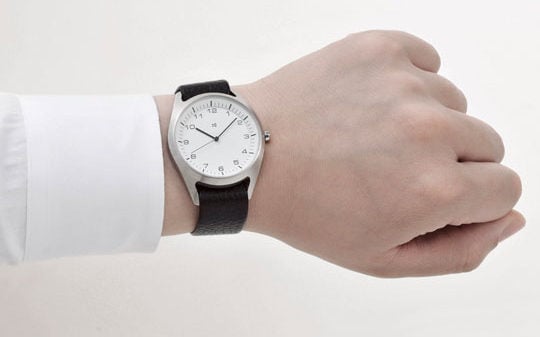
But he's not really a child anymore. Every so often, his voice deepens and cracks and he sounds like his brother. He is asserting his independence and has negotiated for the right to ride his bike to the park alone. The new watch on his wrist beeps to remind him to "touch base" every hour. One time be forgot, but he will not do so again. He doesn't want to lose his freedom.


He's alone a lot, except for his friend Jonathan. Dennis is in the city. Bonnie works afternoons and I am at West Chester with the Writing Project. The lady down the street was supposed to "keep an eye" on Allen but he hated it there with the little kids. He doesn't need a babysitter, he told me. He is old enough to watch himself. We came to a compromise; when Bonnie goes to work, Jonathan is allowed over for company. Allen gets $5 a week for "watching himself." He is saving for a new ten-speed bike.

His sister complained. Shouldn't she be paid for the mornings she is home with Allen?

Allen answered her. "No. You have a job and get paid. This is MY job."

It's not easy being the hero and the baby. Everyone is going in their own directions, hurrying towards their destinations. Allen, too, rides to his (perhaps on a new ten-speed bike?). His road has a few more bumps than some, but it's what you expect when you're a hero.

You just keep riding.

Quirky

My friend Nancy and I talk about our "quirky" sons. Of a similar age, Nate and Allen have both had learning challenges caused by physical maladies. They've been teased and bullied in school, but both are sweet young men who continue to expect the best out of themselves and others.

Allen's issues were caused by elevated blood ammonia, a situation in which the liver does not adequately process ammonia products found in food--particularly protein--and releases the ammonia into the bloodstream. This has the potential to damage cognitive processes and can cause learning disabilities, tremors, confusion, and a condition known to all mothers of teenage boys--with and without high blood ammonia-- "stinky feet." Elevated blood ammonia can happen to anyone at any age. Left untreated, it can lead to liver failure.

While tests of blood ammonia are routinely preformed on newborns, we did not discover until Allen was 4 that his ammonia was four times what it should be. We were told to control his protein intake to decrease the ammonia levels.


For the most part, Allen was an easy kid. The youngest of our three, he demanded very little attention. He required an adapted curriculum in school and had difficulty with new situations. Allen was only 8 when his father began to exhibit signs of clinical depression and just 14 when the car accident permanently disabled and damaged his father. When I was a Pennsylvania Writing and Literature Project Fellow back in 1998, I wrote a story about Allen called, "Scenes from a Hero's Life." To me, Allen has always been a hero. He handles the challenges of his life without complaint.

Allen's early diagnosis was bleak. I was told, when he was 5, that he would never be able to live an independent life. His sister and I worked hard to help Allen have as much independence as possible. Despite the prognosis, Allen earned an Associates of Arts in Applied Computer Technology. He's never been able to find a secure full time job, but he always works. Despite Ron's ups and downs, Allen and his dad are buddies. Years ago, we began referring to Allen's peculiarities as "quirky". We love him for who he is.

I've thought of Allen as my neglected child. Ron's car accident and prolonged illnesses took much time and attention. Never the squeaky wheel, Allen took what "Mom time" he could get.

We had a bit of a lull in the Ron department over the winter, and I began to wonder if there might not be more we could do for my fine and quirky fellow. I went on line and looked up Occupational Vocational Rehabilitation, filled out the application, and was thrilled when Allen received a letter two weeks later. Getting an appointment was not easy--and Allen needed some coercing--but we finally met with a case manager on April 1. And, it looks like Allen will be eligible for some services. He will need a neuro-psych evaluation and then he can apply for Social Security Disability and Medic-aid. It will take months to make it all happen and a continued explanation to Allen of what is going on. But, my mother's heart is glad that Allen might have a chance at a brighter and more independent future.

I guess we're all a little quirky. I live with several who are. Allen's issues with high blood ammonia and Ron's car accident shook, but did not end, our world. My son's struggles and refusal to quit inspired his sister, Bonnie, to work with developmentally delayed children. And I know that I am a better and more sensitive teacher for having had this blue-eyed bundle as my youngest child.

I'd like to end with one of our favorite "Allen stories." On the occasion of our 25th anniversary, Ron and I renewed our wedding vows. Each of the kids said or did something special. Allen's tribute to us was a short speech about "courage". He told the entire congregation that what he had learned from his parents was the meaning of the word, of hanging in there when the going got tough, of not giving up on the people you love.

Right back at you, kid.


Thursday, March 26, 2015

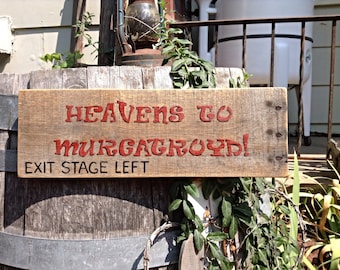
Exit, Stage Left

I am praying as I follow the ambulance down I-95 to Crozer Chester Medical Center. It is a trip I have made before and while my heart no longer threatens to thump out of my chest as I drive, I am not looking forward to the wait time as Ron is admitted to the Emergency Room. I have already called Bonnie, faithful daughter, and she will meet me there as soon as she can. But I will sit alone with my thoughts and “What if’s” for a while before she arrives. I have thrown my go-bag together with a book, my journal, and a knitting project. I will try to keep obsessive thoughts about what and how and why at bay.

It is not difficult to find a spot in the parking lot and I calmly walk down one flight to the corridor that leads to the Emergency Room. I give my name at the desk, even though I know it will be a while before I can see Ron, and I take my seat and pull out my journal. My journal has seen me through fifteen years of hospital runs and I know it will not fail me now. In fact, it is my journals that offered seed for my soon-to-be-published book, Crazy: Diary of the Well Spouse. But I long for some human companionship and a chance to piece together my thoughts.

I am not really eavesdropping, but in the seating section next to me I can hear three women talking. They appear to be mother, daughter, and granddaughter and I gather that they are here because the father has fallen. The older woman seems calm enough, but I recognize the clenched fists of the carefully controlled anguish. I am thinking of approaching the group when the two younger women hug the older one and depart on errands. The one left sits and looks dejectedly around the room. I make eye contact with her. I smile.

Up until fifteen years ago, I thought of myself as a shy person. But hospital waiting rooms can change one’s character and today I think nothing of rising from my seat and introducing myself to this fellow waiter.
“You can tell me to go away if you want, “ I say, “and I will go back to my seat”—I gesture at the chair where my go-bag sits—“but I overheard a little of your conversation and it seems that you and are on similar journeys tonight. Perhaps we could sit together and talk while we wait.” The woman smiles and says, “Of course.”

So I sit, and we talk. My new companion, Phyllis, has been taking care of her husband for 27 years now. I gasp when she says it. “I hoped it would end sometime,” I say. “It’s been fifteen years for us.” She gives me a sad smile and pats my hand. “It never ends, dear.”
Frank, her husband, has had several heart attacks and is in the early stages of dementia. He fell today and since he has multiple problems, she called 911 and had him brought in. I tell her about Ron’s ages ago car accident and the events with heart and medications and depression that brought us to the ER this evening. She is sympathetic and empathizes; we well spouses understand each other.

“If this is all so difficult,” I venture, “and there is no end in sight, why do we stay?”

She looks down for a moment and twists her wedding ring. “We stay,” she says, “because the vows meant something to us. We stay because we remember what they were and what we hope they will be again.”

There it is once more, that word “hope”, the tenacious word that often keeps me hanging onto the branch of the wind-torn tree.  My companion and I speak of our faith in God, of the support of our respective churches, of the energy required—and supplied by our maker—to continue to be care-givers to our husbands.

My daughter and hers enter the room almost simultaneously and Phyllis and I move to our respective family groups. Now and then, we look up and catch each other’s eye. Phyllis’ family is called to go back first and before she moves through the metal detector, I give her an impulsive hug. “Good luck,” I say. “I will pray for you.”
She squeezes me back. “And I you,” she says.
It will be another hour before our family name is called, and even more time will elapse before we find that Ron has overdosed on his heart medications, that his urinary tract infection has altered his sense of right, that his pacemaker has kept him alive. Bonnie and I talk and make phone calls and send texts and pray.

 I pray for Phyllis, fellow care-giver and well-spouse.
And I twist my own wedding ring on my hand, a ring that has seen more worse than better, more downs than ups, more poorer than richer. But the vows, as Phyllis has so astutely pointed out, mean something. For now, I stay.

Sunday, March 8, 2015

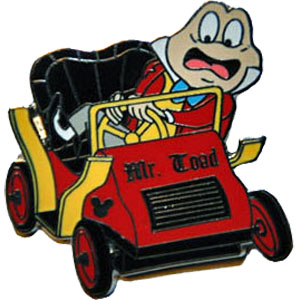
Mr. Toad's Wild Ride

I’ll admit it: I’m a bit of a control freak. And while I do not particularly LIKE to drive, I prefer to drive myself rather than put myself at the mercy of someone else’s driving skills.  The truth is that I know I don’t see as well as I should, so I drive with extra care to make up for it. I can’t say that about everyone.
It was only sheer necessity, then, that forced me—and I do not use the word lightly—to ask Allen to drive me to school on Saturday. My car was, alas, in the shop for a new starter after a very near mishap in the ice and snow on Friday. All’s well that ends well and no one was hurt, but the very prospect of riding with Allen filled me with something akin to terror. I was not to be disappointed.

I’d like to make it clear here that my youngest son is, in all ways, a great person. A bit quirky sometimes—all my kids are—but essentially great. He was willing to drive me in return for some gas money. So, what else was new? He covered over the gashes in his passenger seat with a blanket, very thoughtful, and climbed over the steering column to open the door for me. Yes, the right door to Allen’s van does not open from the outside.

Allen’s van is, well, let’s use the word functional. He has alternately in the last two years played video games in it, carted computers around in it, collected scrap metal in it, and for a brief period of time known in our family lore as “moving out” slept in it for two weeks last summer, joined by his cat Sugar under extreme protest. Needless to say, it does not win the Good Housekeeping Seal of Approval. But it runs, which is its saving grace.

Allen has driven me to Springfield before, but he is good at forgetting directions, so after I make sure we are on I-95 South—not North—the real fun begins. We are passing Chichester Avenue when he suddenly veers to the left. I grab for the door handle. There is no door handle.

“What’s up?” I ask with as much calmness as I can muster. Which is not, I will admit, much.

“Darn van doesn’t do well on the highway,” he says. “It’s the wind.”

I had not noticed discernable wind today, but Allen gets the car back in the right lane and I try to get my heart to return to normal sinus rhythm. All is well for a few more brief moments, until the van veers to the right, narrowly missing the barrier. “Allen!” I shout. Yes, I shout.

“What?” he asks nonchalantly.

“What’s up with your car?” I ask.

“Nothing,” he says. “I've got it.” I beg to differ as he is traveling dangerously close to the highway divide, but I need all of my breath to breathe.

Our journey continues in the same manner; Allen veers, I gasp. At one point in time when a truck bears down upon us and blares the horn, I actually see my life flash before my eyes and grab onto Allen’s arm. He pretends he does not notice. “Am I getting off at 202?” he asks and I am tempted to say yes, even though it is two exits before where I need to be. Perhaps I can call a taxi?

I think I have at least one mini-stroke as my son almost misses the second exit to Delaware Avenue, then careens over a pile of snow and avoids parked cars by inches. I motion him to pull over at the Nemours Building and I climb over a pile of slush as I get out of the car.

“Do you know your way back?” I ask. “Sure,” he says. I pray that it is so.

“When,” he asks me, “do you need to be picked up?”

I am still trying to breathe and I cannot under any circumstances imagine repeating this ride. People at Disneyworld would pay big money for the terror, but I value my life too much.
“I’ll get a ride home,” I say. He shrugs and pulls out. Later on, I cajole a student in my class to drive me home. Professors have a little power. That evening, I mention to Allen that he might need to have a front end alignment on his van.

“Maybe,” he says. “But it could just be you.”

Could be.

Tuesday, February 17, 2015

Doodle Cat: Chapter One

CHAPTER ONE: “We Need a Kitten"
I was clipping my way around the side of the church, nearing the cornerstone with “1942” etched into it, when I saw the white box. I could have sworn it had not been there an hour before, when I had first arrived on the premises and gathered my weeding tools from the shed in the rear parking lot. I was using a pair of old, hand-held clippers; they reminded me of the ones my mother always used when she trimmed the flower beds outside our house. Frankly, there was an electric clipper with the appropriate power cord in the shed. It was the one that most of the lawn volunteers used because it made the chore of trimming easier. But I had not been after fast and easy today. I needed hard, physical work that would let me expel some of my pent-up frustrations. The old yellow shears were doing their work and blisters were forming on my right hand.
Image result for yellow hand clippersI stood for a moment to ease the crick that had developed in my back. Now that I had reached the golden age of forty, aches and pains were beginning to develop in various parts of my body. I feared that rheumatoid arthritis, an inheritance from my mother, would be my fate and I was ready to fight it tooth and nail, the way I fought against most things that had, in the last ten years, brought chaos to my neat and controlled world. I was rolling my shoulders and eyeing up the stretch of flower beds before me when I spotted the white box, sitting squarely on the front steps of the building. It reminded me of school box lunches and, from where I stood, did not appear to have any kind of label or writing.
Curious. But not enough to make me leave off my chore; I’d get to the box when I reached the end of the flower bed. I knelt back on the old bathroom rug I was using to protect my knees from the ground and hefted the clippers. Most of the lawn care volunteers for our expansive church grounds were men. I was happy to let them  operate the tractors and the mowers, careening over the fields like boys on summer break, but I liked to week. It kicked up my allergies and embedded dirt under my nails, but I liked seeing the brightly colored blooms in their neat and tidy beds on my way to work each day. I imagined that visitors and passers-by might see the flowers as a symbol of welcome and come join our ever-dwindling congregation.
Plus, being on my knees gave me the added advantage of time to pray.
Image result for Mexican jumping beansI was being pretty successful at ignoring the curious box when I heard a sound. Slight, soft. I looked up and towards the box and saw it jump. Not a huge, gravity-defying leap, just a small, short little hop, like the Mexican jumping beans I remembered my brother having when we were kids. There were little, tiny animals in the beans, Marcus had told me. They lived in the beans for their entire short and jumpy lives. It was an early disillusion in my big brother to find out that the beans actually held the larvae of a small moth who jumped to try and release itself.
hadn't seen any jumping beans lately, at least not the Mexican kind. Probably, I thought, some humanitarian group that protects moths had them outlawed. If only we gave as much thought to humans.
Image result for white square boxBack to the box. As I stood and watched, it moved again. Just a little. More a shake than a jump, I realized. And then, a faint, faint sound—like drying—was emitted from the box.
My mother senses kicked in. While it had never happened around here, infants had been left on the steps of churches; churches were regarded as safe havens for the drop-off of unharmed but unwanted infants. It would have to be a very small baby to be tucked into such a small box, I thought, but possible. I dropped the clippers to the bath mat, straightened from my crouch, and hurried towards the box. Motherhood is as much instinct as biology; I began to offer soothing words to the jumping and crying box as I neared it.
“Shhh. It’s okay. Everything’s okay. I’m coming, sweetie.” My own child was far past the days when he required soothing platitudes—okay, maybe no one was ever really past that stage—but the words came naturally.
The box had been left right at the front door, on the top step. It jumped a few more times as I approached it and I feared it might drop off the step. I hurried a bit, continuing my litany of comfort. The box stopped moving and crying and I felt my own heart skip a beat. A torrent of thoughts ran through my mind, most in the form of bold headlines: Baby Found on Local Church Steps; Dead Baby Found on Local Church Steps; Officials Looking into Death of Baby Found on Church Steps. I reached the box in a nanosecond—as Jeffy would say—and opened the lid, a difficult feat since I was still wearing gardening gloves.
Image result for gray kitten in a boxAnd there, nestled inside on a pink blanket, its little nose equally pink and its little  mouth opened in protest at such shabby treatment, was a gray kitten. There was a plastic pink collar around her neck and fastened to it—unbelievably—was a note. The kitten mewled when she saw me and reached out a gray paw, touching my gloved hand. I pulled the note from her collar, peeled off my gloves, and unfolded the square of notebook paper.
Please take care of this kitten, the note said. You need her.
Using both hands, I picked up the mewling bundle. She snuggled into my arms and began purring. I stroked her kitten-soft fur and thought it through. The whole situation seemed to be both ludicrous and miraculous. Bringing the kitten to my cheek, I felt the corners of my mouth turn up into a smile. Her purring became louder. I felt like purring myself.
I had no idea where the box, the kitten, and the note had come from, but I did know that the unnamed writer was right:
We did need a kitten.


Thursday, January 8, 2015

Collecting Happiness

There is no duty we so much underrate as the duty of being happy. By being happy, we sow anonymous benefits upon the world.  -- Robert Louis Stevenson

I always pause a moment before I use the key-card at the door. Purposefully, I arrange my face into a pleasant, smiling expression. Whatever cares I might have carried here by car or train to school cannot enter with me; my students, many of whom lead very difficult lives of their own, deserve a cheerful smile, a kind word, a warm hug. I know that I need to be a light in their worlds. Spread, as it is, a little happiness.

But I also need to be a light in my own. My Authentic Self is sipping a second cup of tea in my cozy kitchen as I bundle up for my morning commute. It is 20 degrees today, with the wind chill making it feel 11. Layers are a requirement. She watches me struggle with my garments with sympathy. "Keep warm, "she says. "We need you."

It is one of my life's greatest challenges. So many people need me! Students, children, husband. Especially husband. If not for them--and the income from teaching--I could throw off all my layers and sit down for that second cup of tea. I would dream of a little cottage by the ocean, a warm beach, a writing table set up on a porch to overlook the blue expanse.

My Authentic Self begins to tell me of her book--our book--in progress, the first meeting of Max and Emma. It is the beginning of a friendship that spans 50 years. It is not sexual, she is quick to point out. It is deeper, a joining of souls. The story is set in North Philadelphia at the time of the Civil Rights Movement, right after the riots that took place on Columbia, the street where I now teach.


"So soak it all up," she tells me. "I will need details!" It is details, we both know, that makes a story real. Not "It is cold today" but "Ice hangs from the low branches of the tree, snapping off unexpectedly and shattering on the frozen ground." Already, Emma and Max are starting to breathe on their own, as all good characters must.

I nod at my Authentic Self; even as I teach my small students to read, I will tuck snippets of details into my mind. Part of me will remain here, at her table in the corner of the dining room, at the second-hand laptop.

The cold air stabs at my lungs as I hurry to the car, the warmth of my kitchen and the scent of peach tea still filling my senses. It makes me happy, the thought of Emma and Max and their lives spinning out before me.

Yes, I wish I could stay home with my Authentic Self, sipping tea and writing. Writing is hard work, I know. But for now I brave the cold, gathering ideas and details as a squirrel gathers nuts. They will, at some time, be needed.

The rented house on Fairhill where Dennis lived in the first years after college will become the perfect setting for the protagonist, Samantha, a bit lost after the death of her mother, Emma. The playfulness of my own cocker spaniel, Taffy, will be reborn in Sam's dog, Pippa. My friend Bill will see some of himself in Max.

None of it is wasted. Ever. It is what I tell my adult college students when they return for their purloined degrees. Each experience is part of the journey.

For now, my path leads me up I-95 North and into the city while my Authentic Self hovers in the back of my mind, collecting the tidbits that will make a novel. One day soon, though, I will have collected enough.

I can feel my Authentic Self smile.

Monday, January 5, 2015

In Search of Authentic Self: The Woman You Were Meant to Be!!!!


Every year, I find a "day book" to read each morning, something full of wise thoughts and Bible verses. This year, I've picked up Sarah Ban Breathnach's Simple Abundance: A Daybook of Comfort and Joy. It was a gift from a teacher at Little Flower Girls' School and I have, up until now, pretty much just left it on the shelf.

But today's reading speaks of finding "authentic self", and since I've been on the search for a long time, I thought I could use a road map. I had dreams and plans, I know, but they have been put aside as the incessant demands of work and family intruded. I have lately reconnected with my authentic self. I found her cowering behind a basket of laundry in the basement, practically hidden by a box of Christmas ornaments.

"What are you doing down here?" I demanded as I searched for my winter boots. "Why aren't you at the computer, writing that novel we've always talked about?" I noted that she held a pen in one hand and a sheaf of bills in the other. The sight saddened me. She had shown so much promise! To be reduced to this!

She spread her arms out. "This is the only space you have given me." Her arms knocked over a pile of paint cans. They clattered to the floor one by one and she bent to pick them up.

"Leave them," I said. I recognized that what she said was true. I had relegated her to a very tiny space in my life. There she sat, pen in hand, while I raced about my busy day. I sometimes nodded to her in passing. Once, last summer, I sat and spoke with her for more than an hour, until someone upstairs called my name.

"This isn't right," I said to my authentic self. "You can't grow down here. There is no room. There is no light."

I left the paint cans rolling across the floor and invited my authentic self upstairs. I made her a strong cup of Irish tea and set her up in a corner of the dining room, at a well-lit table with a second-hand laptop.

"It's not much, " I apologized.

She waved my comment aside. "It's enough, " she said. "I just need a little bit of space and light." She sipped at her tea and began bounding on the keys of the laptop.

I walked away, smiling, I intend to visit her everyday to see how she is faring, keeping her supplied with tea and pens. Already, some color has returned to her cheeks and she looks a bit better.

And, while I am getting to know my authentic self, I have to try not to think about those paint cans rolling around in the basement.