As we look not to the things that are seen but to the things that are unseen. For the things that are seen are transient, but the things that are unseen are eternal.
(2 Corinthians 4:18)
“Blind? I could be blind?” It wasn’t the news my parents and I expected to hear from the ophthalmologist at Wills’ Eye Hospital in Philadelphia. I was a freshman in college, studying to become a teacher.
But my vision was not being cooperative. I’d worn glasses since I was six, but still walked into walls and fell down steps. During Christmas break, I’d backed my dad’s car into a telephone pole I just didn’t see.
At all.
At nineteen, I needed to change my perspective. I was diagnosed with Keratoconus, a rare disease of the corneas that could lead to distorted vision, double and triple images, and the need for transplants. Oh, and the possibility of blindness.
Have you ever been faced with news that made you rethink the path you were on?
That made you question the way you viewed your life and the world around you?
That made you wary of what your eyes told you?
In the more than forty years since that diagnosis, I’ve learned that I do not always see things for what they are, but I can always trust God for who he is. My own corneas were temporary, but donor corneas have allowed me to have sufficient vision to teach.
I’ve managed to find the humor in my distorted view of the world that is, like my corneas, transient. A gray sweatshirt may look like a cat, a leaf may resemble a mouse, and a mailbox may appear as the image of a man. I keep my eyes on God, who looks not on our outward appearance, but into our hearts.
Is there something temporary in your life that is obscuring your vision of the eternal God?
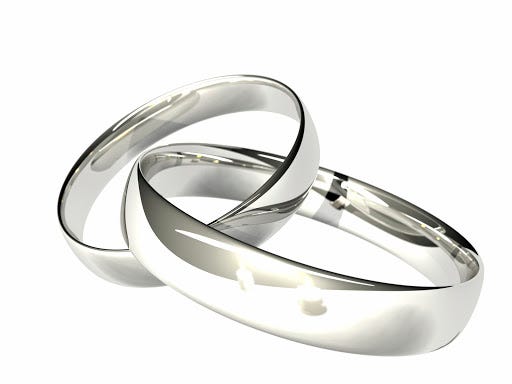
Ring-a small band, usually of precious metal, worn on a finger and often a symbol of love
Its weight is slight, almost insignificant as it rests in the palm of my hand, but its strength has been enduring. I recall the smooth feel of it when Ron slipped it on my finger oh, so, many years ago, at the beginning of its journey.
We have arrived at the end.
I consider the circle of silver carefully, marveling at the births and vacations and graduations and marriages it has seen, the injuries and surgeries and hospitalizations that might have dulled its shine but didn’t.
Not even death.
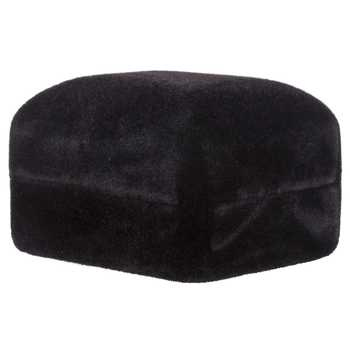
I pick up the square black velvet box from my dresser and open it slowly. Inside is the mate to the ring in my hand, larger and bulkier, the ring Ron’s painfully swollen finger could not endure for the last 18 months of his life.
“I’m keeping your ring,” I whispered to him on that final day. “I’ll keep it safe because you are still my husband.”
The two rings lay side by side on my palm now: the smaller one strong enough to bear the weight of care-giving and loss, the larger one strong enough to bear the weight of pain and sorrow.
A tear slides down my cheek. I am making a decision today, but it is not irrevocable. This small unbroken ring of silver has encircled my finger for the last 20 months while Ron’s has slumbered in the black box.
I can put it back on if I need it.
Tenderly, I slip the two rings—together—into the square box and close the lid quietly, whispering another promise.
“I am no less committed to you now than on the day these rings were new.”
For a moment, I feel the ache of emptiness on my finger, the pain of loss that is always in my heart. I take a deep breath and pick up another ring, also silver, with three small diamonds on its band, the ring Ron gave me on one of the last birthdays we had together.
Past. Present. Future.
Ron is now in my past and for the moment, I stand in the present alone while he waits in heaven, whole and healthy. But he is also in my future.
I will see him again.
I slip the band with the diamonds onto my hand and stow the box with the two silver wedding rings in my jewelry case.
"To them I will give a new name within my temple and its walls a memorial and a name better than sons and daughter, I will give them an everlasting name that will endure forever." Isiah 56:5
I am wrung out with emotion. Today, eighteen months after my husband's death, I have moved our queen-size bed back into the spot beneath the double windows where it had been until the day he died. On that awful night, I'd shoved his side of the bed against the wall, piling pillows around it to fill the empty space. I slept on my side, facing away from the void.
I am stronger now, I think. Ready to move the bed back. I have found a new life for myself and my autistic son; I have written sixteen chapters of a book I hope will impact the way people view autism and grief; I have dared to envision a life without Ron.
But after I move the bed back and rearrange the pillows, I collapse onto the bed and cry. I have moved into a life without my husband. The knowledge holds both joy and sorrow. When my tears are spent, I get up and look at the room we have shared for 44 years. It is my room now.
Maybe I'll paint it.
Evening comes. Allen and I eat and play a board game, a new routine in our life of two. We watch an Avengers movie while I knit. We talk easily of Ron, how he cheated at Monopoly and loved Iron Man, how his smile was slightly crooked and he yelled at the television set. Allen's acceptance of Ron's death took time and patience. Ron is not forgotten. I think of the Egyptian proverb: You are not dead as long as someone remembers your name.
We remember.
I have said goodnight to my son; he gives me the rare hug he saves for bedtime and follows me into my room where he plops down on Ron's side of the bed.
"You moved it back."
"It was time," I say and he nods. He grabs a pillow from Ron's side and holds it to his face.
"It still smells a little like Dad."
"A little," I agree. I have washed the pillow and enveloped it in a new case, but sometimes I think I still detect Ron's lingering scent.
"Can I sleep with it tonight?"
I shrug. "I guess. Something wrong with your pillow?"
"No," he says. "I just sort of want to be close to Poppa tonight. I thought it would be nice to sleep with his pillow."
"Alright."
Happily, he gathers the pillow in his arm and squeezes it, then rises from the bed and walks towards the door.
"Allen," I say, "you've never called Dad 'Poppa' before. Why now?
He turns back to me, this man child who only knew an ill father. "Well, Mom," he says, "Dad has a new life now. He's not old and sick anymore because God gave him a new body and took him to Heaven." He grins. "And I thought Dad's new life deserved a new name."
Allen is sitting on the steps when I come out of my bedroom, blocking my dash downstairs where I will have just enough time to grab some breakfast before I head off to school. His head hangs low, an attitude of dejection.
“I’m giving up,” he says flatly.
“Alright,’ I say. I carefully move around him and down a few steps before I turn and face him. “What are you giving up on?”
“The dryer.” He sighs and looks up at me. “I tried. I really did. But…” he shrugs, “ nothing’s working.”
I nod sympathetically, but I am actually relieved. For the last three months, Allen has been obsessed with fixing the dryer, verging on a meltdown whenever I mention calling a repairman. “I can fix it!” he’d insisted. “Why won’t you just let me try?”
So I’d let him try. He ordered plugs and cables and cords from Amazon, took the back off the appliance and drilled holes into the panel, and spent days fuming about “companies that make things so they fall apart.” Once a week, I hauled the wet laundry to the laundromat and pondered my son’s need to try and revive things that no longer functioned.
It is a trait, I’ve learned, of those on the spectrum, a reluctance to accept loss. Be it a missing tool or the dryer, Allen simply cannot accept, grieve, or move on until he sees for himself that nothing can be done. It is an obsession that sets him apart from his siblings and keeps the shed in the backyard filled with things he’s “working on.”
And it’s part of the process I needed to allow him to go through when his father died suddenly last year; it began a nine month journey in which Allen tried everything imaginable to get his father to come back. The acceptance was hard won.
I reach out now and touch my son’s shoulder. “It’s alright. I know you did your best. Some things just can’t be fixed.”
He heaves a heavy sigh. “I guess so. At least I know I did everything I could.” He leans his head against his hands and a few tears fall. I know he is mourning more than the dryer. I put my arms around his shoulders and we stay on the steps a few more moments, my breakfast forgotten.
“Well,” he says, standing up, “that’s that. Guess you’ll need to get a repairman.”
I think of the dryer parts strewn around the basement, cords running here and there. It is now the Frankenstein monster of dryers. “Or we can just get a new one.”
He grins. “That’s probably best.” He heads down the steps and I follow. It took nine months for him to accept the loss of his father. It took three months to accept the loss of the dryer.
They say there's a place where dreams have all gone They never said where, but I think I know Its miles through the night just over the dawn On the road that will take me home
" I talked to Dennis for about an hour last night," my daughter says, "and we both agreed that often, Dad was the voice of reason."
I smile from the passenger seat of her red Civic. When the various illnesses that plagued my husband rose to the surface, he could be anything BUT reasonable, but this is something I shielded my children from for two decades. I wanted them to see their father for his heart.
"It wasn't so much that he would say anything, " Bonnie continues, "it was just that he was there. Listening to us. Solid. Big. Like he had all the time in the world just to listen." She sighs. "I'd walk in the house and he'd say, 'There she is! There's my girl and her beautiful smile!' and it was like nothing else mattered. Everything would be okay. You know?"
I know. While I have not missed the various nursing duties or the back breaking labor that fell on my shoulders during Ron's last years, I have everyday missed his solid presence. I miss coming home from school each day and telling him about my high school students and their struggles to learn English, the interesting characters I see on my train ride, or the latest idea I have for a story.
"The boys and I realize," she says as she makes a right turn into the drive, "that he wasn't always that calm. That when we were there it was different than when it was just you. We know there was a lot of..." she searches for a word,"...disquiet."
And when I pass by, don't lead me astray don't try and stop me, don't stand in my way I'm bound for the hills where the cool waters flow On the road that will take me home
I nod as we drive up the gentle slope of Lawncroft Cemetery. The bells of the carillon--a sound my husband loved--are playing. I think back to a conversation I had with my oldest son, Dennis, years ago when Ron was in a crisis center.
"We all know," he said, "that you often throw yourself on the live grenade that is Dad to protect us. You let us still have, well, Dad."
It had been a conscious decision I'd made early on when bipolar disorder and manic episodes ruled our days. I told myself that while I could do little to keep the illness from affecting Ron, I could do my darnest to make sure it did not affect our children or their love for their father.
"Look!" says Bonnie and gestures to a family of deer standing deer a grove of trees. "How pretty!" The doe and three fawns stand motionless on the hillside while the bells of the carillon echo in the air.
I take a deep breath. Sometimes the ache is so deep and raw that I need a few moments to recover. My daughter understands. We watch the deer for a moment and listen to the fading music, then pull around the curve at the top of the hill. She stops her car next to the bent oak tree.
Love waits for me round the bend, leads me endlessly on Surely sorrows shall find their end And all our troubles will be gone
I reach into the back and gather up the poinsettias as Bonnie surveys the area. "It's quiet up here," she says. "Even though the highway is right over there. It's a good spot for Daddy. He liked to be near the action!"
Silently we walk towards Ron's final resting place. In the last sixteen months, the grass has grown over the burial mound. Bonnie stoops and brushes dried leaves and grass from her father's marker, tracing his name with her finger. Ronald A. Cobourn. 1951-2019. We remove the fall flowers from the holder and struggle with the poinsettias, arranging and rearranging until she is satisfied. We kneel there for a few moments, our memories thick. She takes my hand as we walk back to the car.
I know in my bones, I've been here before The ground feels the same, tho the land's been torn I've a long way to go, the stars tell me so On this road that will take me home.
"I don't come here often," she says. "He's not really here."
"Just what Allen says," I reply, thinking of my youngest child whose autism made acceptance of his father's death difficult. "Allen says it's just Dad's old broken body that he doesn't need anymore."
"He's right," she says and she pops the locks on the car doors. We slide in. "Daddy's in heaven now. He's not sick anymore." She puts the key in the ignition and turns to me. "Thanks," she says quietly.
"For what?"
"For giving Dennis and Allen and me the best part of Daddy. For letting us have that part." She puts the car in gear and sighs. "We know it wasn't easy." She pulls away from the grave site and slowly drives down the hill.
I touch my hand to my heart. "But I kept the best part, too," I say.
Bonnie smiles and we exit the cemetery as the bells begin to play again.
And I know what I've lost and all that I've won When the road finally takes me home I'm going home, I'm going home, I'm going home
The LORD will surely comfort Zion and will look with compassion on all her ruins; he will make her deserts like Eden, her wastelands like the garden of the LORD. Joy and gladness will be found in her, thanksgiving and the sound of singing
Isaiah 51:3
The dream felt real to me. The garden grew up around us, scarlet rhododendrons and sunshine yellow daffodils pushing their way through the cracks in the pavement beneath our feet. I breathed in the flowery fragrances of the blooms, marveling at the spring-like abundance so late in the autumn.
I felt a light touch on my arm and smiled at my husband. His image was wavy, translucent. "You did this," he said and waved his hand at the abundance around us. His silver wedding ring--nestled in my jewelry box for the last 15 months--gleamed in the sun.
"I'm no gardener," I said and shook my head. "Everyone knows I make plants die."
Ron smiled gently. "Yes, you are. You've made beauty for me, for the kids, for your students, for your readers. You've taken what was hard and painful and made something beautiful from it." He stamped a strong foot onto the pavement. "You've done what very few people could do."
I took a deep breath. "I did what I had to do."
Ron took my hand. His hair, fully gray the last time I saw him in his casket, was the blue-black of his twenties. "That's just it. You didn't have to." His voice became a gentle whisper. "I know how awful it was, how exhausting."
"For both of us," I said. I noticed that his form was beginning to fade, the lovely blossoms of my garden clearly visible through his frame. "Stay," I said softly.
"I can't," he said. "If I was here," and he turned his head, taking in the abundance around us, "none of this would have happened. I just wanted to tell you, well, I knew you'd be okay. When I had to leave, I knew you'd make a new and wonderful life for yourself. I knew you'd help the kids to move on." He plucked a single pink rose from a bush thar had sprung up next to him. No thorn pricked his hand. He held it beneath his nose for a moment, his clear lungs breathing in the fragrance. "It's your turn now," he said and handed the rose to me.
I took it and touched its velvety petals. "It's lovely," I said.
"Just as your life will be," Ron said. "Your long life. You have lots to do." He blew a kiss towards me. "I'm so proud of you." He melted into the garden.
And I held onto the rose, breathing in the heady fragrance of my husband's love.
There are hot tears running down my cheeks when I wake up a full hour before my alarm is set to go off. I lay quietly for a moment, assessing my feelings: I am unsettled and sorrowful. The last few days have brought many reasons for unrest into my soul; there have been shootings, racial unrest, and lootings near the city high school where I teach. But this feels more private, a personal grief. I fling my arm across to my husband's side of the bed and grab his pillow, bringing it close.
The pillow no longer has Ron's scent. I burrow my face into it, will my heart to continue beating, and the reason for my early morning sadness becomes clear.
The chair.
Last night, my son and I heaved and shoved and pushed my husband's heavy lift chair out to the porch, down the steps, and onto the front lawn where our town's heavy trash truck will pick it up in the morning. Weighing 168 pounds, it was not an easy feat. I clutch Ron's pillow to my chest and remind myself it was equally hard to bring it in.
I'd been looking for a lift chair for my disabled husband for months, but the price tag always made me shudder. The week before Ron's 68th birthday, I saw an ad on Facebook Marketplace: "Lift chair, maroon, good condition, $200." I called the number and arranged to drive down to Kennet Square on Saturday to look at it. My son and I left the house early, telling Ron's hospice nurse we'd be back by noon.
The chair was ugly, but serviceable. We lashed it onto the back of my Nissan with bungee cords and I eased back up Route 1 with my flashers on while Allen kept an eagle eye on the chair. Once home, my strong son managed to push the chair up the hill in front of our house, bully it up the steps, and squeeze it through the doorway. We put it by the fireplace, in perfect line with the television, and made a sign for the seat: Happy Birthday!
I'd wanted the chair to soothe the physical problems of Ron's hurt body; I still had hope that he'd improve. I envisioned the possibility of a future for us, the trip to Hawaii we wanted to take, golden years spent together.
The first week we had the chair, Ron pulled on the remote too hard and snapped the wires; I ordered a new one on Amazon. The second week, Ron pushed his weight against the arm and it pulled away from the frame of the chair; Allen turned the chair on its side and hammered the arm in place. The third week, Ron fell against the foot rest and bent the frame; Allen used a hammer to straighten it out. The fourth week, Ron ripped the pocket on the side; I took a tapestry needle and carpet thread and sewed it back. The fifth week, the electrical cord shorted out: Allen went to the hardware store and bought a new one.
By the sixth week, we had no need of a lift chair.
As faint morning light begins to lighten my bedroom, I wrap my arms around Ron's pillow and hug it. There is a light tap at my door. "Mom?" says Allen. "Are you awake?"
"Yes," I say, sitting up in bed. "Come in."
Allen's 6 foot 6 inch frame fills the doorway.
"Couldn't sleep?" I ask.
"Thinking."
"Me, too." I pat the space on the bed next to me and he sits down, leaning his head against my shoulder. Allen's life on the autism spectrum made accepting his father's death particularly difficult.
"I know it was time to get rid of Dad's chair," he says. "No one but the cat sat in it now. And I know it made you sad to see it everyday. But it feels like there's a...hole, you know?" He puts his hand on his heart. "Like an empty space."
I nod. "But it won't always be empty. We'll fill it with new memories and put Dad into them."
He sighs. We sit there, our heads bowed together, and we hear the rumble of the trash truck as it pulls up to our house and squeals to a stop. Allen makes a move to rise; I put a hand on his knee and he slumps back onto the bed.
"We need to let it go," I whisper and he nods. There are voices, faint and low, drifting across the front lawn. Truck doors slam. We hear the rev of the engine as the truck moves away from thehouse.
Allen rises and looks out my bedroom window. "It's gone," he says. "Dad's chair is gone." I join him at the window, and for a few more moments we gaze out at the empty front yard. Our arms around each other, we cry.
My new paring knife is missing and I need it for the roasted potatoes I am preparing for our Sunday supper. I shout to my son.
“Allen! Where is my paring knife? The one with the black and gray handle!” I specify the color because two other knives--both with plain black handles--have been heisted from the utensil drawer by Allen, who says they are both his and now reside in, respectively, his tool box and his shaving kit.
“Was it a pointy thing?” asks Allen.
Yes. Pointy and sharp and metal. A knife. You know, a knife!
But Allen doesn’t know. The concept of specific names for things is difficult for him to grasp. He can easily recall what we name articles of clothing--socks, shoes, shirts, pants--but other things have much more fluid labels.
“What’s that wooden thing we use on the leaves, Mom?” he will ask me.
“A rake?”
“Ah, yes. A rake. A rake.” He’ll repeat it several more times, trying to embed it in his brain that has too many synapses trying to make connections. He’ll probably ask me the name again when the leaves start to fall.
The rooms in our house are, to Allen, defined only by their contents. The living room is, “the place where we watch movies”, the kitchen is, “where we keep the refrigerator”, and the dining room is, currently, “where the computer is.” I can understand his confusion with the dining room which has been, in his lifetime, “the room with the big table,”, “the room where we do our homework,” and --in the last year of my husband’s life--”where Dad sleeps in the funny bed.”
Not only are the monikers changeable, the use of the items in our house are flexible. I see a dented tea kettle with a melted handle and Allen sees a steam engine used to power a mini-bike. I fold up a box from Amazon and place it in the trash and he shouts, “Mom! I can use that for my safety stand!” I do not know what his safety stand is and I don’t ask. I just hand over the cardboard.
If I want to throw something away, I wrap it in a black plastic bag and bury at the bottom of the trash bin.
“Great grandpa Waltersdorf would have loved you,” I tell my son. “He liked to collect things. He had a ball of string--little bits he’d saved and tied together--this big.” I spread my hands the width of a pumpkin.
“Where is it?” asks Allen. I’m sure his brain is already thinking of constructing an intricate spider web he can use to catch energy waves.
I shrug. “Gone long before you were born.” He looks sad, probably at the loss of the string and not a great grandparent he never knew.
Like those of many people who exist on the autism spectrum, Allen’s thought processes are often difficult to change. Supper must be at 5:30, Friday is when we order pizza, and market day is Thursday. The predictability helps him stay grounded in a world that changes too fast. Social skills are not his strength; we work hard to prepare for any situation involving people outside his immediate family, laying the foundation weeks in advance and social stories to help him with societal expectations. “I don’t know why that’s important,” he will say when I ask him to comb his unruly hair before his grandmother comes, “but I’ll do it.”
His rigidity in some areas is a dichotomy to his creativity. He sees objects and their potentials in a way no one else can. The tangled copper wire in the basement will become the spokes of a bike designed for outer space. The 2 by 4 on the porch with the pulley and rope will serve as the support for the elevator of his sister’s new house. I see none of these possibilities in these items, but, as he points out to me, I’ve got about a hundred skeins of yarn stored in my closet that I envision as blankets and sweaters.
It is the need to create--to DO something--that helped Allen come to terms with his father’s death last year. While his brother and sister mourned in more conventional ways, the additional synapses in his neurotypical brain provided him with excess information. He needed to see for himself that his dad, no matter how much he wanted it, was not coming back. I think of it like reading an encyclopedia that has no index. Allen doesn’t know how to pare the input down.
I’ve come to understand my son and his different way of looking at life. I, too, can be flexible.
“I don’t know where the gray and black pointy thing is,” he tells me, “but you can use mine.” He obligingly brings me the black handled pointy thing from his Dopp kit, used to clean his razors. Resigned, I wash it in hot water, pare my potatoes, and hand it back to him. He watches me carefully, making sure I do not slide it into the utensil drawer.
“Thank you, “ I say.
“Anytime,” he says before he carries it upstairs. “You can use it anytime. Just ask.”
I smile as he leaves the room. On my way home from work tomorrow, I will stop at the Family Dollar Store and buy a new pointy thing, perhaps red. I will stow it among my baskets of wool and mohair and cotton on the shelves of my closet, a place Allen never goes. He, poor thing, cannot see the possibility of creations among the rainbow colors.
Remember that question teachers used to ask on the first day back at school?
What did you do on your summer vacation?
I stopped asking that question years ago, too aware of the inequities among my students that allowed some to go to horseback riding camp at the country club and take cruises to Bermuda, while others needed to work a part-time job and babysit younger siblings. I also stopped asking because my own summers were usually rift with negative things: hospital stays, ER visits, complex surgeries, teaching summer classes, and the exhaustion that came from caring for a chronically ill spouse.
Nothing I wanted to share.
At our first back-to-school PD of 2019, the leader asked that question. I declined to answer. If I had, it would have been one sentence.
I buried my husband.
The weeks following Ron's passing were filled the complexities of a death. I had forms to fill out, finances to juggle, and an autistic son who did not understand the finality of his dad leaving. Then school started back up in September and Allen and I were figuring out our new normal when the pandemic forced us all into a virtual reality. Life was busy, busy, busy.
This summer, though, has been different. The What did you do on your summer vacation? question is one I would be happy to answer.
Nothing.
And in doing nothing, I did everything.
We Americans are oddly proud of our ability to work 60+ hours a week, eschewing our paid vacation days, and working at home on the weekends. Typically, we work 30-90 minutes a day more than our European counterparts. We wear our exhaustion like badges of honor. For all of our work ethic, though, we are only 5th for productivity among the developed countries. Know who's first?
Luxembourg. Tiny little Luxembourg.
This little Grand Duchy in Europe is only 998 square miles but ranks as the most productive country in the world. They have a 29 hour work week, get 25 paid vacation days, and 10 national holidays. Except for the travel industry, there is no work on Sunday. And everyone in the country speaks three languages: French, German, and English.
Clearly, we've got this wrong.
The Italians have a similar concept when it comes to work/life balance. La Dolce far Niente, the "sweetness of doing nothing", is a sharp contrast to our American expression of "I can sleep when I die." Not to rain on your plans or anything, but when I get to Heaven I plan on doing much more than sleeping. I want to enjoy those streets paved with gold, visit loved ones, and eat a hot fudge sundae without counting the calories.
I Corinthians 10:31 tells us "So, whether you eat or drink, or whatever you do, do all to the glory of God." (ESV). The Apostle Paul provides some motivating factors for his words in 1 Corinthians 6:12, but the basic point is this: Do it all for the glory of God. All of it. Is working ourselves into a frazzle pleasing God? Is it forwarding His kingdom? Or are we serving ourselves and our bottom lines?
When June 12th and summer finally rolled around, I needed a serious rest. Learning to teach high school students English as a Second Language on line and coping with the first year of widowhood following years of caring for an ill husband left me beyond exhausted. I felt like the limp wet noodle my grandmother--God bless her--would threaten to smack me with. We were still in the throes of the pandemic so a long vacation was not in the plans.
So I sat. On my back deck. In my living room. In the chair out front. I napped in the afternoon, and took evening walks to the river. Every Tuesday, my son and I went on a field trip to an open area: national parks, beaches, wildlife preserves. We played games and watched movies. For the first time in a very, very long time, I found myself feeling well-rested. I found myself reconnecting with myself. With my own spirit. With God.
I'd planned on doing a deep Bible study on the attributes of Mary during the summer. I even bought the book. But more often than not, I just found myself sitting outside with a second cup of tea, admiring my newly planted garden, and listening to the sounds of the morning. For the first time in decades, I became attuned to the still, small voice of God. I realized that my life did not have to be about activity 24/7.
Susan Smalley, PhD, Professor Emeritus at the UCLA Department of Psychiatry, says, “Science is starting to show the value of spending time in silence, in nature, and in not engaging in constant external stimulation. We need time doing ‘nothing’ to be our best selves: well-rounded and creative human beings. The ‘doing’ side of our nature needs a ‘being’ side to be in balance.”
There is something in our brains that scientists call the Default Mode Network (DMN). When we are quiet with ourselves, this amazing network allows us to see patterns in new ways, to problem-solve, and to come up with creative ways to engage with the world. So, in doing nothing, at least for a short while, we are really doing everything.
This summer, I did everything. While I did nothing. I in no way regret the time I spent caring my my chronically ill husband. I'd give him another 19 years in a heart-beat.
Let's face it, friends. God as the Creator of all Things did not NEED to rest on that 7th day. He did it for our sake, as a model for us frail humans to follow. He did it so that we might recover from the sweat of our brow and the carpel tunnel syndrome in our wrists.
We've sort of blown it. But it's not too late.
I did nothing this summer. But I also did everything. And even as school starts again and my time is divided into 45 minute segments, I want to continue to build into my schedule this all-important, life-altering practice. I'm getting pretty good at it, but as with any art, I need more practice.